How to File Tax Returns in Nigeria: Step-by-Step Guide (Tax return and Tax filing)
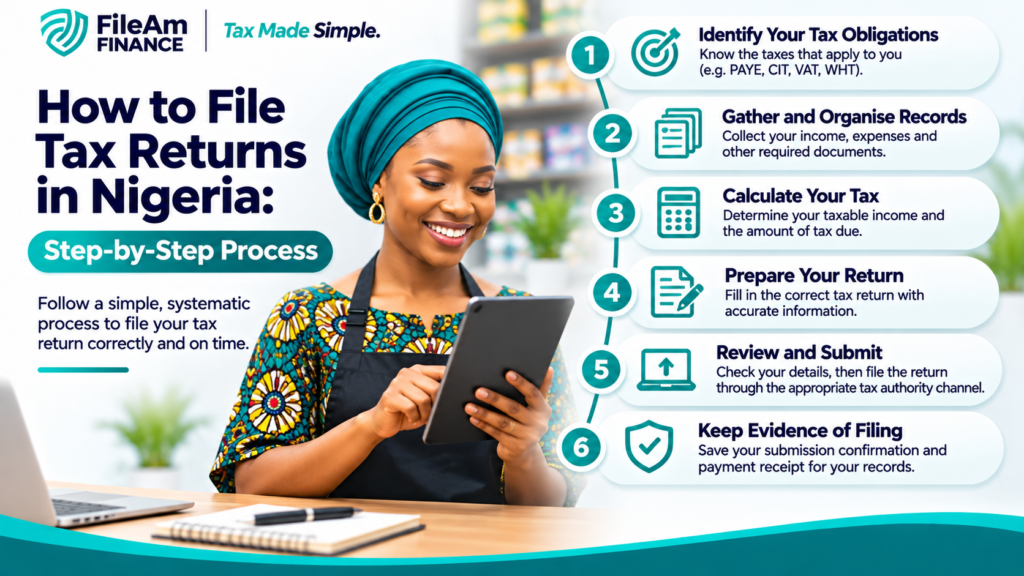
Knowing how to file tax returns in Nigeria is an important part of staying compliant, whether you are an individual, self-employed professional, small business owner, or company. However, tax filing involves more than simply paying whatever amount of tax you think you owe. You need to identify the correct tax obligation, gather the necessary records, calculate the relevant tax liability, submit the appropriate return, and keep evidence of the filing.
For many taxpayers, the process becomes stressful because they wait until a deadline is approaching before gathering their financial information. Missing records, inaccurate figures, unfamiliar filing procedures, and unclear deadlines can turn what should be a routine compliance activity into a difficult task.
The good news is that tax filing becomes much easier when you approach it systematically.
This guide explains what a tax return is, who may need to file, what documents you may need, how to prepare and calculate your tax, how to submit returns, important deadlines to watch, and how digital tools can make the process more manageable.
What Is a Tax Return?
A tax return is a formal submission containing information that a taxpayer provides to the relevant tax authority about income, transactions, financial activities, or other information required under applicable tax rules.
A tax return helps the tax authority determine or verify a taxpayer’s tax position for a particular period.
It is important to understand the difference between filing a tax return and paying tax.
Filing involves submitting the required information and return. Payment involves settling the tax liability that is due.
Depending on the tax involved, a return may contain information about:
- Income.
- Revenue.
- Allowable expenses.
- Taxable profit.
- Tax already deducted or paid.
- Tax liability.
- Relevant supporting information.
The specific information required depends on the type of taxpayer and the particular tax return being submitted.
Who Needs to File Tax Returns in Nigeria?
Tax filing obligations differ depending on a person’s circumstances and the type of tax involved.
The following groups may have tax filing responsibilities.
Individuals
Individuals earning taxable income may have personal income tax obligations.
The applicable requirements can depend on the individual’s income, residence, employment status, and other relevant circumstances.
Employees
Employees commonly have tax deducted from their employment income through the Pay As You Earn system, or PAYE.
However, taxpayers should not assume that PAYE automatically answers every possible tax filing obligation they may have. Other income or circumstances can create additional responsibilities.
Self-Employed People
Freelancers, consultants, professionals, contractors, and people operating businesses in their personal capacity may have personal income tax responsibilities.
They need to maintain proper records of their income and relevant expenses to support accurate tax reporting.
Companies
Companies have their own tax filing obligations.
A company may be required to file Company Income Tax returns and may also have other obligations, such as VAT or withholding tax responsibilities, depending on its activities.
Businesses With Other Tax Obligations
Some businesses may need to submit other types of returns depending on what they sell, who they pay, and the nature of their transactions.
For example, a business may have responsibilities involving:
- VAT.
- Withholding tax.
- PAYE.
- Company Income Tax.
- Other applicable taxes or statutory obligations.
Therefore, taxpayers should identify their specific obligations instead of assuming that every person or business follows exactly the same filing process.
What Documents Do You Need to File a Tax Return?
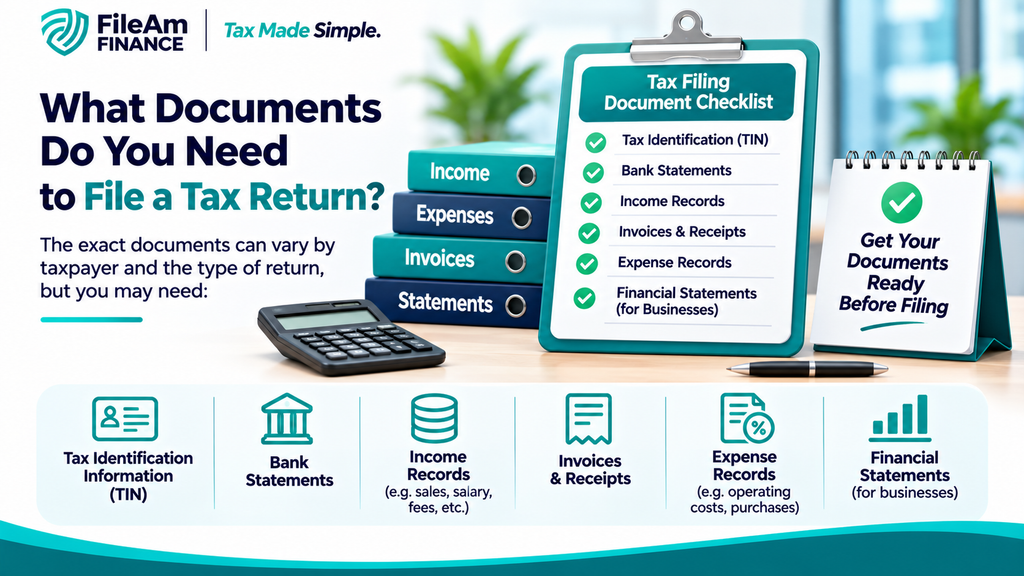
The documents required will depend on the taxpayer and the specific return being filed.
However, taxpayers may need information or supporting documents such as:
- Tax identification information.
- Bank statements.
- Income records.
- Sales invoices.
- Expense records.
- Financial statements.
- Payroll information.
- Previous tax records.
- Relevant receipts.
- Other supporting financial documents.
Companies may need more extensive financial information than individuals because their tax returns can involve company accounts, taxable profit calculations, and supporting schedules.
The best approach is to prepare your records before beginning the filing process.
Waiting until the last minute to search for financial documents can cause unnecessary delays.
How to Prepare Your Tax Return Before Filing
Good preparation is one of the most important parts of successful tax filing.
Before submitting anything, follow these steps.
Step 1: Identify the Tax You Need to File
First, determine which tax obligation applies to you.
Depending on your circumstances, this could include:
- Personal Income Tax.
- Company Income Tax.
- VAT.
- Withholding Tax.
- PAYE.
- Other applicable returns.
Do not start entering figures until you know which return you are preparing.
Filing the wrong type of return can create compliance problems even if the information you submitted is accurate.
Step 2: Gather Your Financial Records
Once you understand the filing requirement, collect the information needed to support the return.
For an individual, this might involve income records, employment information, bank records, or other relevant documents.
For a company, the process may involve:
- Financial statements.
- Revenue records.
- Expense documentation.
- Bank statements.
- Invoices.
- Payroll information.
- Previous tax records.
Organizing these documents early makes the next stages much easier.
Step 3: Organize Income and Expenses
Separate your income and expenses properly.
For businesses, avoid mixing personal transactions with business records where possible.
Organize information into logical categories so you can determine:
- Total income or revenue.
- Relevant expenses.
- Tax-deductible or allowable expenses where applicable.
- Other adjustments required for tax purposes.
Good bookkeeping makes tax preparation considerably easier.
Step 4: Determine Taxable Income or Profit
The amount of money entering a business is not necessarily the same as the amount on which tax is ultimately calculated.
For individuals, the relevant tax calculation may involve taxable income after applicable reliefs or deductions.
For companies, accounting profit may need adjustments under applicable tax rules to determine taxable profit.
Understanding this distinction prevents taxpayers from simply applying a tax rate to their total revenue without considering the actual tax rules.
How to Calculate Tax Before Filing
Tax calculation depends on the type of tax being filed.
A simplified process is:
Identify taxable income or profit → apply relevant deductions or reliefs → determine the taxable amount → apply the applicable tax rate or bands → determine the tax liability.
For individuals, applicable tax bands and reliefs may affect the final amount.
For companies, the calculation can involve adjustments to accounting figures before arriving at taxable profit.
For VAT, the calculation generally relates to taxable supplies and the applicable VAT rate.
For withholding tax, the amount deducted depends on the nature of the payment and applicable WHT rules.
Because tax calculations can become complicated, businesses should avoid relying on assumptions when preparing returns.
How to File Tax Returns in Nigeria
Once your records and calculations are ready, the next step is submitting the return through the appropriate filing channel.
The exact procedure can vary depending on the taxpayer, type of tax, and relevant tax authority.
However, the general process follows these steps.
Step 1: Prepare Your Information
Have your taxpayer information, financial records, calculations, and supporting documents ready.
Step 2: Access the Appropriate Tax Filing Channel
Use the relevant official or authorized filing platform for the tax obligation you are dealing with.
Do not assume that every type of tax return is submitted through exactly the same system.
Step 3: Enter Your Taxpayer Information
Provide the required identifying information accurately.
Check details such as:
- Tax identification information.
- Business or personal details.
- Relevant tax period.
- Contact information.
Step 4: Provide Income and Financial Information
Enter the figures required by the applicable return.
These should match your supporting financial records.
Step 5: Upload Required Documents
Where supporting documents are required, upload the appropriate records in the required format.
Step 6: Review Your Return
Do not rush to submit.
Review:
- Income figures.
- Expenses.
- Tax calculations.
- Taxpayer information.
- Supporting documents.
A simple review can catch mistakes before submission.
Step 7: Submit the Return
After confirming that the information is accurate and complete, submit the return through the applicable filing channel.
Step 8: Save Your Submission Evidence
Keep evidence that the return was submitted.
This could include:
- Submission confirmation.
- Filing acknowledgment.
- Payment evidence.
- Copies of the submitted return.
These records can be useful for future reference, audits, and compliance reviews.
How to File Tax Returns Online in Nigeria
Online tax filing has made it easier for taxpayers to manage certain tax responsibilities without relying entirely on physical paperwork.
Depending on the applicable tax and filing system, online filing can provide benefits such as:
- Reduced paperwork.
- Remote access.
- Faster submission.
- Easier recordkeeping.
- Better tracking.
- Reduced dependence on physical visits.
However, online filing does not eliminate the need for accurate preparation.
A taxpayer can still submit incorrect information electronically.
The technology makes the process easier, but the taxpayer remains responsible for ensuring that the information being submitted is accurate and complete.
Tax Filing Deadlines in Nigeria
One of the most important aspects of tax compliance is knowing when your return must be filed.
There is no single deadline that applies to every tax return in Nigeria.
Deadlines can depend on:
- Type of tax.
- Type of taxpayer.
- Company’s accounting period.
- Filing frequency.
- Applicable tax legislation.
For example, a company’s annual tax filing requirements can differ from periodic VAT or PAYE obligations.
Businesses should therefore maintain a tax compliance calendar that tracks all relevant dates.
A useful compliance calendar can include:
- Official filing deadline.
- Internal preparation deadline.
- Document collection date.
- Review date.
- Approval date.
- Submission date.
Setting internal deadlines before the official deadline gives finance teams time to deal with unexpected problems.
What Happens If You File Your Tax Return Late?
Missing a filing deadline can create compliance problems.
Depending on the relevant tax and applicable rules, consequences may include:
- Late filing penalties.
- Additional financial liabilities.
- Interest where applicable.
- Compliance follow-up.
- Additional administrative work.
The exact consequences depend on the type of return and the rules applicable to the taxpayer.
Businesses should not wait until after a deadline has passed before addressing a missed filing.
If you realize that you have missed a deadline, take steps to understand the outstanding obligation and resolve it as soon as possible.
Common Tax Filing Mistakes to Avoid
Even businesses that intend to comply can make avoidable mistakes.
Filing the Wrong Return
Make sure you know which tax obligation you are dealing with before beginning the filing process.
Using Inaccurate Financial Information
The information in your return should be supported by reliable financial records.
Missing Supporting Documents
Incomplete documentation can make filing more difficult and can create problems if the information needs to be verified later.
Using Outdated Tax Rules
Tax legislation and administrative requirements can change.
Avoid relying on old articles, spreadsheets, or calculations without checking whether they remain applicable.
Missing Filing Deadlines
A company may prepare an accurate return and still face penalties if it fails to submit it within the applicable deadline.
Failing to Review the Return
Small errors in taxpayer information, financial figures, or calculations can create unnecessary problems.
Poor Recordkeeping
Without organized records, it becomes harder to prepare accurate returns and respond to future compliance requests.
Assuming Payment Means Filing Is Complete
Paying a tax liability and submitting a required tax return are not necessarily the same activity.
A taxpayer should confirm that all relevant filing and payment requirements have been completed.
How to Make Tax Filing Easier for Your Business
Tax filing becomes much easier when businesses stop treating it as a last-minute activity.
Instead, create a process that runs throughout the year.
Maintain Financial Records Regularly
Keep income, expenses, invoices, receipts, bank records, and other relevant documents organized.
Create a Tax Compliance Calendar
Record every important filing deadline and create internal deadlines before the official dates.
Prepare Documents Before Filing Periods
Do not wait until the final week to start searching for records.
Standardize Your Internal Process
Create a repeatable workflow for:
- Gathering records.
- Reviewing financial information.
- Calculating tax.
- Preparing returns.
- Approving submissions.
- Storing evidence.
Use Digital Tools
Digital systems can make it easier to organize documents, track deadlines, and maintain compliance information.
How FileAm Simplifies Tax Filing in Nigeria
For businesses managing multiple tax responsibilities, one of the biggest challenges is keeping financial and compliance information organized.
FileAm can help businesses centralize important compliance documents and create a more organized approach to managing tax-related activities.
Instead of relying on scattered files, emails, and manual reminders, businesses can use a structured digital environment to manage relevant information.
This can help with:
- Organizing tax documents.
- Maintaining compliance records.
- Tracking important responsibilities.
- Improving access to financial documentation.
- Preparing for future filing and compliance activities.
The goal is not simply to make filing faster. Good tax management also requires keeping the records and supporting information that make future compliance easier.
Frequently Asked Questions About Tax Filing in Nigeria
How do I file tax returns in Nigeria?
Start by identifying the tax obligation that applies to you, gathering the necessary financial records, calculating the relevant tax liability, preparing the appropriate return, submitting it through the applicable filing channel, and keeping evidence of submission.
Can I file my tax return online?
Yes, certain tax returns can be managed through online filing systems. The exact process depends on the type of tax, taxpayer, and applicable tax authority.
What documents are needed to file a tax return in Nigeria?
Requirements vary, but taxpayers may need tax identification information, income records, expense records, financial statements, bank statements, invoices, payroll information, and other supporting documents.

Who is required to file tax returns?
Filing obligations depend on the taxpayer and the applicable tax. Individuals, employees, self-employed people, companies, and businesses may have different filing responsibilities.
How do I calculate my tax before filing?
Identify the relevant tax, determine the taxable income, profit, or transaction value, apply applicable deductions or reliefs, and then use the applicable rate, tax bands, or calculation method.
What happens if I miss my tax filing deadline?
Late filing may result in penalties or other compliance consequences depending on the type of tax and applicable rules. It is best to address missed deadlines promptly.
Can I file tax returns without an accountant?
Some taxpayers may be able to manage straightforward filing responsibilities themselves. However, complex business structures, significant transactions, or difficult tax calculations may require assistance from a qualified tax professional.
What is the difference between filing a tax return and paying tax?
Filing involves submitting the required tax information to the relevant authority. Payment involves settling a tax liability. Depending on the obligation, both may need to be completed.
Conclusion
Learning how to file tax returns in Nigeria becomes much easier when the process is approached systematically.
The basic process is straightforward:
- Identify your tax obligations.
- Gather your financial records.
- Organize your income and expenses.
- Determine your taxable income or profit.
- Calculate the applicable tax.
- Prepare the required return.
- Submit it through the appropriate filing channel.
- Keep evidence of submission.
- Monitor future deadlines.
The biggest mistake businesses and individuals can make is waiting until the last minute. Regular recordkeeping and early preparation reduce the likelihood of missing information, making calculation errors, or overlooking filing deadlines.
For businesses with multiple compliance responsibilities, digital tools can also make it easier to keep documentation organized and maintain a consistent filing workflow.
Tax filing should not be treated as an annual scramble. With proper records, a clear process, and the right tools, businesses can make tax compliance a more predictable part of their regular financial operations.