SME Tax In Nigeria

A lot of people run a small or medium-sized enterprise (SME)in Nigeria but only a few know that this requires more than managing customers, employees, sales, and cash flow. Business owners must also understand their tax obligations and establish proper systems for meeting filing and payment deadlines.

SME tax can cover several obligations depending on the nature and structure of a business, including income tax, withholding tax, value-added tax (VAT), payroll-related taxes, and other statutory obligations. For incorporated businesses, understanding corporate tax on SMEs is particularly important because the tax treatment of a company can differ from that of an individual business owner.
Nigeria’s tax framework has undergone significant changes, including reforms effective from 1 January 2026. Under the current framework, small companies can qualify for a 0% corporate income tax rate if they meet the applicable conditions. Current guidance identifies a small company for this purpose as one with annual gross turnover of up to ₦100 million and total fixed assets not exceeding ₦250 million.
However, a 0% corporate income tax rate does not mean that an eligible SME can ignore tax compliance. Companies still have registration, recordkeeping, filing, and other obligations.
Understanding SME Income Tax
One of the most important areas for business owners is SME income tax.
For incorporated businesses, corporate income tax generally applies to taxable profits, subject to the applicable rules, exemptions, rates, and thresholds. Current Nigerian guidance states that small companies meeting the applicable turnover and fixed-asset conditions are subject to a 0% corporate income tax rate, while companies outside the small-company category may be subject to the standard corporate rate.
This distinction is important because business owners sometimes confuse turnover with taxable profit.
Turnover represents the revenue generated by the business, while taxable profit is determined after applying the relevant tax rules to income and allowable deductions or adjustments.
Track your annual turnover and fixed assets throughout the year rather than waiting until the end of the financial year to determine whether your company falls within the small-company category.
Corporate Tax on SMEs
SMEs should also take corporate tax seriously. Corporate tax on SMEs should be viewed as an ongoing compliance responsibility rather than simply a payment made at the end of the year.
For a company that does not qualify as a small company, the current headline corporate income tax rate is 30%. Small companies meeting the relevant conditions are currently subject to a 0% rate.
The applicable classification can affect how a company’s tax liability is calculated, but business owners should not assume that the 0% rate eliminates all other tax obligations.
For example, an SME may still have obligations relating to withholding tax, VAT where applicable, payroll taxes, or other statutory requirements.
Create a tax obligations schedule listing every tax that could apply to your business rather than focusing only on corporate income tax.
Keep Accurate Accounting Records
Good recordkeeping is the foundation of effective SME tax management.
Your records should make it possible to establish how much the business earned, what it spent, what assets it owns, what taxes it paid, and what amounts it owes.
Maintain records such as:
- Sales invoices
- Receipts
- Bank statements
- Expense documentation
- Payroll records
- Supplier invoices
- Customer records
- Asset registers
- Loan agreements
clean accounting system makes tax filing easier and gives management better information for making business decisions.
SMEs should monitor turnover throughout the year
SME owners should not wait until year-end to determine whether their business still qualifies for a particular tax classification.
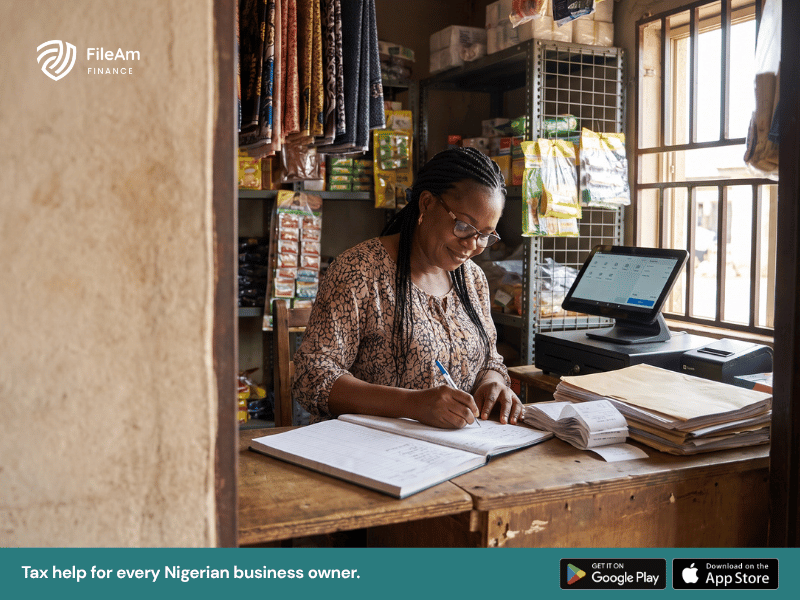
Current Nigerian corporate tax guidance uses turnover and fixed-asset thresholds in determining whether a company qualifies as a small company.
This means growth can potentially affect your tax position.
A company that begins the year comfortably within the small-company threshold could experience substantial growth before year-end.
Action point: Review your cumulative turnover every month and compare it with the applicable threshold.
Also maintain an updated fixed-asset register so you can monitor the value of qualifying assets.
SMEs should File Tax Returns Even When Tax Payable Is Low or Zero
A common SME mistake is assuming that a low or zero tax liability means no return needs to be filed.
These are two separate issues. A business can have little or no tax payable while still having a filing obligation. Under current Nigerian corporate tax administration guidance, companies must file annual returns, including the required tax computation and supporting financial information. The standard deadline is within six months after the end of the financial year, or within 18 months after incorporation for a new company, whichever comes first.
Put every tax filing deadline on your business calendar and assign responsibility to a specific person. Do not assume that a 0% tax rate means you can skip the annual return.
Track Allowable Business Expenses
Understanding expenses is essential when managing SME income tax.
Businesses incur costs for rent, salaries, professional services, advertising, software, utilities, transportation, equipment, and other operational activities.
However, not every expense automatically receives the same tax treatment. Some costs may be deductible, while others may be subject to specific rules or require different treatment.
Avoid creating expenses simply to reduce taxable profit. Tax planning should involve legitimate deductions and incentives rather than inaccurate reporting.
Understand Withholding Tax Obligations
SMEs may also encounter withholding tax (WHT) when paying certain suppliers, contractors, professionals, or other recipients.
A business may be required to deduct tax from a qualifying payment and remit it to the appropriate authority.
This can create confusion because the amount deducted is not simply an additional expense for the business. It can represent tax withheld from the recipient’s payment.
Before making significant payments to contractors or service providers, determine whether withholding tax applies and document the deduction and remittance properly.
Maintain evidence of WHT deductions and remittances so that the business and recipient have appropriate records.
Review VAT Obligations Separately
Corporate income tax and VAT are different taxes.
A business may have a particular income tax position while also having VAT responsibilities depending on its activities and applicable thresholds.
Current Nigerian tax reforms provide specific VAT treatment for small businesses, including rules concerning when certain small businesses are required to register and file VAT returns.
Do not assume that your corporate income tax classification automatically determines your VAT obligations. Review VAT requirements separately based on your business activity, turnover, and applicable exemptions or thresholds.
Understanding the Development Levy
SMEs should look beyond corporate income tax because of the existence of other statutory charges. Under the current Nigerian framework, a 4% Development Levy applies to assessable profits of Nigerian companies subject to the levy, while small companies and non-resident companies are excluded. The levy replaced several previous corporate levies.
This illustrates why business owners should assess their complete tax position instead of calculating only one tax. During annual tax review, SMEs should ask their accountant or tax adviser to identify every applicable tax, levy, exemption, and filing obligation.
SMEs should use tax incentives where they qualify
Some businesses may qualify for government tax incentives designed to encourage investment, innovation, employment, exports, or activity in specific sectors.
Nigeria’s current tax framework includes the Economic Development Tax Incentive, which replaced the former Pioneer Status Incentive.
Eligibility depends on the specific incentive and the business’s activities.
Always review available incentives before making major investments or expansion decisions. Confirm eligibility requirements and maintain the documentation required to support any claim.
SMEs should create a monthly tax checklist
Tax compliance becomes easier when it is turned into a routine.
At the end of every month, SMEs should review:
- Total sales and revenue
- Business expenses
- Bank reconciliations
- Payroll
- WHT obligations
- VAT obligations, where applicable
- Tax payments
- Outstanding invoices
- New assets purchased
- Upcoming filing deadlines
This process can identify problems before they become expensive. Assign one employee, founder, accountant, or external adviser responsibility for maintaining the monthly tax checklist.
SMEs should prepare for year-end filing early
Do not wait until the filing deadline to begin preparing your corporate tax return. Start by reconciling bank accounts, reviewing revenue, checking expenses, updating the asset register, and collecting supporting documents.
Companies are required to file annual tax returns with the relevant authorities, and current guidance specifies documentation such as tax computations, financial statements, self-assessment forms, and evidence of payment where applicable.
Action point: Begin your year-end tax preparation at least several weeks before the filing deadline.
Early preparation gives you time to correct bookkeeping errors, locate missing documents, and obtain professional advice when necessary.
Common SME Tax Mistakes to Avoid
Several mistakes can make tax compliance unnecessarily difficult.
Ignoring filing obligations: A low or zero tax liability does not necessarily eliminate filing requirements.
Mixing personal and business transactions: This makes financial records harder to verify.
Failing to monitor turnover: Business growth can affect tax classification.
Ignoring WHT: Certain qualifying payments may create deduction and remittance obligations.
Treating every expense as deductible: Tax treatment depends on applicable rules.
Missing deadlines: Late filings can result in penalties and other compliance problems.
Failing to keep documentation: Unsupported transactions can become difficult to defend during a tax review.
Final Thoughts
Effective SME tax management starts with good financial administration. Business owners should understand their legal structure, obtain and verify their tax identification details, maintain accurate records, monitor turnover, separate business and personal finances, and keep track of every applicable tax obligation.
Understanding SME income tax is particularly important because the tax position of a business can change as it grows. Under Nigeria’s current corporate tax framework, eligible small companies can benefit from a 0% corporate income tax rate, while companies outside the small-company category may be subject to the standard corporate rate.
At the same time, corporate tax on SMEs is only one part of the broader compliance picture. SMEs may also need to consider withholding tax, VAT, payroll obligations, development levies, and other requirements depending on their circumstances.
The most effective approach is to treat tax as a regular business process. Maintain your records every month, monitor your tax position throughout the year, schedule filing deadlines in advance, and seek professional advice when your business structure or transactions become complex.
A well-organized tax process not only helps an SME remain compliant; it also gives founders a clearer picture of profitability, cash flow, and the financial health of the business.