Small Business Tax Software in Nigeria: Simplify Tax Filing for SMEs and Startups

Managing taxes is one of the responsibilities that comes with running a business in Nigeria. For small businesses and startups, however, tax compliance can feel unnecessarily complicated. Owners often have to balance sales, employees, customers, suppliers, expenses, cash flow, and growth while also keeping track of tax obligations and filing deadlines.
This is where small business tax software in Nigeria can make a difference.
Instead of relying entirely on spreadsheets, paper records, calculators, and scattered documents, businesses can use digital tools to organise tax information and simplify parts of the compliance process. The right software can help businesses keep better records, monitor obligations, prepare calculations, and reduce the risk of avoidable errors.
But tax software is not simply about clicking a button and paying tax. To get the most value from it, business owners need to understand what tax software does, what it cannot do, and how it can fit into their broader financial management system.
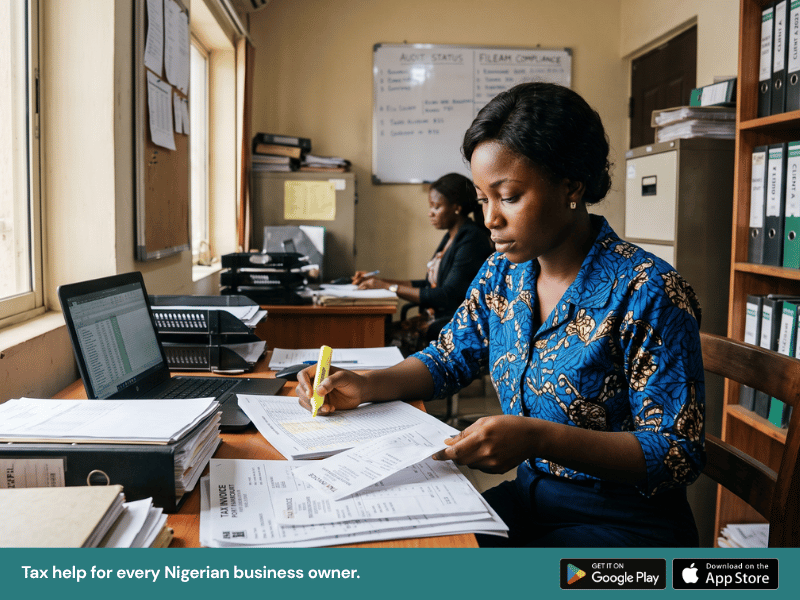
In this article, we explore how small business tax software in Nigeria can help SMEs and startups simplify tax filing, improve recordkeeping, and build a more organised approach to tax compliance.
What Is Small Business Tax Software?
Small business tax software is digital technology designed to help businesses manage tax-related activities.
Depending on the platform, it may help with tasks such as:
- Recording financial transactions
- Organising invoices and receipts
- Calculating taxes
- Tracking tax obligations
- Preparing reports
- Monitoring filing deadlines
- Managing employee payroll information
- Storing tax documents
- Creating an audit trail
The features available can differ significantly between platforms.
Some systems focus mainly on accounting, while others are designed specifically for tax compliance. There are also broader business management platforms that combine accounting, payroll, invoicing, document management, and tax-related functions.
For an SME, the goal is not necessarily to find software with the largest number of features. The better approach is to find a system that solves the business’s actual problems without creating unnecessary complexity.
Why Do Nigerian SMEs Need Tax Software?
Small businesses often start with simple systems.
A founder may record sales in a notebook, keep receipts in a drawer, store invoices in email, and use a spreadsheet to calculate expenses. This may work when the business has only a few transactions.
As the business grows, however, the volume of financial information increases.
There may be:
- More customers
- More invoices
- More suppliers
- More employees
- More expenses
- More bank transactions
- More tax obligations
- More compliance deadlines
At that point, manual processes can become difficult to manage.
A missing receipt may affect a calculation. An incorrectly entered figure may create a reporting problem. A forgotten deadline may result in penalties or unnecessary stress.
Small business tax software in Nigeria can help bring these processes into a more organised digital environment.
The Biggest Benefits of Tax Software for SMEs
1. Better Recordkeeping
Accurate records are fundamental to tax compliance.
A business needs to understand how much money it earns, what it spends, and which transactions relate to its operations.
Tax software can help organise this information digitally.
Instead of searching through multiple folders or messages for an invoice, the business can maintain a central record of its financial information.
Good recordkeeping can also make it easier to respond to questions about a particular transaction.
2. Reduced Manual Calculations
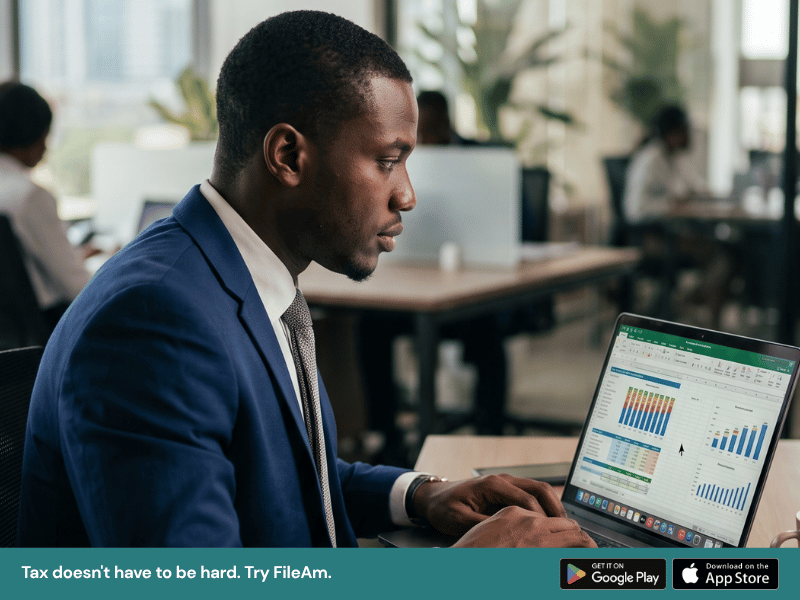
Manual tax calculations can be time-consuming.
The more transactions a business handles, the greater the opportunity for human error.
Automated calculations can reduce repetitive work by applying predefined formulas and rules to financial information.
This does not eliminate the need for review, but it can reduce the amount of routine calculation that employees or business owners have to perform manually.
3. Easier Tax Filing
One of the most frustrating parts of tax compliance for small businesses is gathering the information needed for filing.
If financial records are already organised, preparing the necessary information can become much easier.
Tax software can help businesses organise the figures and documentation needed for their tax processes.
The exact filing capabilities depend on the software and the tax obligations involved.
Some platforms may support direct filing or integration with relevant systems, while others may simply prepare information that the business or its accountant submits through the appropriate channels.
4. Tax Deadline Management
Missing a tax deadline can create unnecessary problems.
A small business owner may be focused on customers, payroll, stock, marketing, or business expansion and simply forget an important filing date.
A digital system can provide reminders and compliance calendars to help businesses stay aware of upcoming obligations.
This is particularly useful for startups where one person may be responsible for several administrative functions.
Tax Software for SMEs in Nigeria: What Should You Look For?
Choosing tax software for SMEs in Nigeria should begin with the business’s needs.
Before selecting a platform, consider the following features.
Automated Tax Calculations
The software should make relevant calculations easier and reduce repetitive manual work.
However, businesses should verify that the system supports the taxes and rules relevant to their circumstances.
Invoicing
An invoicing feature can help businesses maintain a record of sales and customer transactions.
When invoicing and financial records are connected, it becomes easier to maintain a clearer picture of business income.
Expense Tracking
Businesses need to know where their money is going.
Expense tracking allows owners to categorise business spending and maintain supporting documentation.
Document Storage
Receipts, invoices, tax documents, and other records should be easy to locate.
A digital document management feature can prevent important records from becoming scattered across different devices.
Reporting
Reports can help business owners understand revenue, expenses, taxes, and cash flow.
Good reporting can also make conversations with accountants and financial advisers more efficient.
Security
Tax and financial information is sensitive.
Businesses should consider how the software protects their information, who can access it, and whether appropriate security controls are available.
Ease of Use
Software should simplify business administration rather than create another complicated process.
A small business may not need an enterprise-level system with hundreds of features.
The best option may be a straightforward platform that the owner and employees can use consistently.
Tax Software for Startups in Nigeria
Startups often operate with limited resources.
At the beginning, founders may handle accounting, marketing, customer service, operations, and compliance themselves.
As the company grows, these responsibilities can become difficult to manage manually.
Tax software for startups in Nigeria can help founders establish better financial systems early.
This can be particularly useful when a startup begins to:
- Hire employees
- Raise investment
- Issue more invoices
- Work with multiple suppliers
- Expand into new markets
- Handle larger transaction volumes
- Manage more complex financial records
Introducing digital processes early can also reduce the difficulty of moving from informal recordkeeping to a more structured financial system later.
How Tax Software Can Help With Payroll
For businesses with employees, payroll introduces another layer of complexity.
A payroll system may help manage:
- Employee salaries
- PAYE calculations
- Deductions
- Payroll records
- Payslips
- Payroll reports
The exact tax treatment depends on the applicable rules and the employee’s circumstances.
Businesses should ensure that payroll software is maintained according to current requirements and reviewed regularly.
Automation is useful, but it should not replace oversight.
A business should still review payroll reports and investigate unusual figures.
Can Tax Software Replace an Accountant?
This is one of the most common questions business owners ask.
In most cases, software and professional tax advice serve different purposes.
Software can be very good at:
- Storing information
- Performing calculations
- Generating reports
- Automating repetitive tasks
- Sending reminders
- Organising records
An accountant or tax professional can provide:
- Professional judgement
- Tax planning
- Interpretation of complex rules
- Advice on unusual transactions
- Support during tax disputes
- Guidance on business structure
- Assistance with complex compliance issues
For a small business with straightforward transactions, good software may reduce the amount of routine work an accountant needs to perform.
For a growing business with more complex tax affairs, software can work alongside an accountant rather than replacing one.
Digital Tax Filing vs Manual Tax Filing
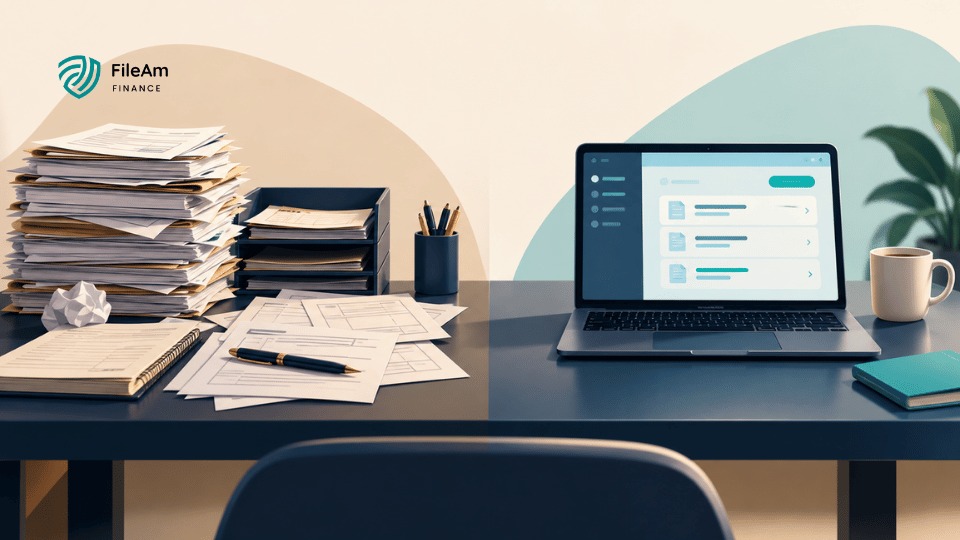
The move from manual processes to digital systems is changing how businesses manage their tax obligations.
Manual Approach
A traditional process might involve:
- Recording transactions in spreadsheets.
- Printing or collecting receipts.
- Manually calculating tax.
- Preparing documents.
- Filling out forms.
- Submitting information.
- Storing paper copies.
This can work for a small number of transactions, but the risk of errors increases as the business grows.
Digital Approach
A digital process can involve:
- Recording transactions electronically.
- Uploading invoices and receipts.
- Categorising income and expenses.
- Automatically calculating relevant figures.
- Generating reports.
- Monitoring deadlines.
- Preparing filing information.
- Storing records electronically.
The result can be a more efficient workflow.
However, digital does not automatically mean compliant. The business still needs to use accurate information and follow the relevant tax requirements.
Common Tax Software Mistakes Businesses Should Avoid
Technology can make tax management easier, but poor use of software can still create problems.
Entering Incorrect Information
Automated software cannot correct inaccurate information automatically.
If a business enters the wrong revenue or expense figures, the resulting calculation may also be wrong.
Failing to Update the Software
Tax rules can change.
A business should ensure that its software provider updates the relevant tax rules and that the business is using the appropriate settings.
Treating Every Expense as Deductible
Not every business expense necessarily receives the same tax treatment.
Businesses should understand which expenses are recognised under the applicable tax rules.
Ignoring Supporting Documents
A digital calculation is not a substitute for evidence.
Businesses should retain appropriate invoices, receipts, payment records, and other supporting documentation.
Assuming Software Guarantees Compliance
Software can support compliance, but the business remains responsible for the accuracy of the information it submits.
How to Introduce Tax Software Into a Small Business
Moving from spreadsheets to software does not have to happen overnight.
A business can start with a simple process.
Step 1: Identify Your Current Problems
Ask what is causing the most difficulty. Is it:
- Calculating taxes?
- Tracking expenses?
- Finding receipts?
- Preparing invoices?
- Remembering deadlines?
- Managing payroll?
Start with the biggest problem.
Step 2: Organise Existing Records
Before moving information into a new platform, clean up existing records.
Remove duplicates and correct obvious errors.
Step 3: Choose Appropriate Software
Compare available solutions based on:
- Features
- Cost
- Ease of use
- Security
- Support
- Scalability
- Integration capabilities
Step 4: Train Your Team
Everyone responsible for entering financial information should understand how the system works.
Even the best software can produce poor results if employees use it inconsistently.
Step 5: Review Reports Regularly
Do not wait until tax filing time to discover problems.
Review financial and tax-related reports regularly.
Step 6: Keep Backup Records
Important business records should be protected appropriately.
Understand how the platform handles backups, data retention, and account recovery.
How SaaS Tax Software Can Support Business Growth
One major advantage of SaaS-based financial tools is scalability.
A startup may begin with a small number of customers and transactions. As it grows, the business can continue using its digital systems rather than repeatedly rebuilding its processes.
A SaaS platform can provide access through the internet and may offer ongoing updates and centralised data management.
This can be particularly useful for businesses with distributed teams or owners who need access to financial information while working from different locations.
For growing SMEs, the ability to connect tax management with accounting, invoicing, payroll, and document management can also reduce duplicated work.
How to Keep Your Tax Data Organised
Even with small business tax software in Nigeria, businesses need good internal practices.
A useful system should include:
Income records: Keep track of sales and other business income.
Expense records: Record legitimate business expenses and retain supporting documents.
Tax records: Keep tax calculations, returns, assessments, and payment evidence.
Payroll records: Maintain employee salary and relevant payroll information.
Invoices: Store invoices issued and received.
Bank records: Reconcile business transactions against bank statements.
Compliance calendar: Track important filing and payment deadlines.
The objective is simple: when you need a financial document or figure, you should be able to find it without searching through multiple unrelated systems.
Frequently Asked Questions
What is small business tax software in Nigeria?
It is software that helps SMEs manage tax-related activities such as calculations, recordkeeping, reporting, compliance monitoring, and, depending on the platform, filing.
Is tax software suitable for startups?
Yes. Tax software can help startups establish organised financial and compliance processes as they grow.
Can tax software calculate my business taxes?
Many platforms can perform certain tax calculations, but the specific taxes and calculations supported depend on the software.
Does tax software file taxes automatically?
Not necessarily. Some platforms may support filing or integration with tax systems, while others only prepare the information needed for filing.
Is tax software better than spreadsheets?
For businesses with growing transaction volumes, software can provide automation, better organisation, and improved workflow compared with manually maintained spreadsheets. However, the best solution depends on the business’s needs.
Can tax software replace an accountant?
Not always. Software can automate calculations and administrative tasks, while accountants provide professional judgement and advice, particularly for complex tax situations.
Conclusion
Small business tax software in Nigeria can help SMEs and startups move away from fragmented, manual tax processes and toward more organised digital financial management.
The value of tax software goes beyond calculating tax. A good platform can help businesses maintain records, track expenses, organise invoices, monitor deadlines, prepare reports, and reduce repetitive administrative work.
For startups, adopting digital systems early can create a stronger foundation for growth. For established SMEs, tax software can help improve efficiency as transaction volumes increase.
However, software should be treated as a tool rather than a substitute for responsible tax management. Businesses still need accurate records, appropriate documentation, current tax information, and professional advice when dealing with complex matters.
The right approach is to choose technology that fits the business, keep financial information accurate, review tax calculations regularly, and maintain organised supporting records.
With the right combination of small business tax software in Nigeria, good recordkeeping, and sound financial practices, SMEs and startups can spend less time wrestling with administrative tasks and more time focusing on what matters most: building and growing the business.