Can the Fine for Late Filing of Company Income Tax in Nigeria Be Waived or Reduced?

Receiving a tax penalty after missing a filing deadline can be frustrating for businesses, especially for small and growing companies managing limited financial resources. Many business owners and finance teams begin searching for solutions and asking whether the Fine for late filing of company income tax in Nigeria can be waived, reduced, or reconsidered.
Late filing penalties are designed to encourage companies to meet their tax obligations within the required timeframe. However, businesses may sometimes experience unexpected situations that affect their ability to complete filing on time. In such cases, companies may want to understand whether there are available options for requesting consideration.
It is important to understand that penalty relief is not automatic. A company cannot simply ignore a fine or assume it will disappear. Any request for waiver or reduction must follow the appropriate process and should be supported by valid reasons and relevant documentation.
This guide explains whether late filing fines can be waived or reduced, the factors that may influence such decisions, and the steps businesses can take when requesting penalty consideration.
Understanding Late Filing Penalties for Company Income Tax in Nigeria
Company Income Tax filing is an important compliance responsibility for businesses operating in Nigeria. Companies are expected to prepare their tax returns, submit the required information, and complete their obligations within the applicable timeframe.
When a company fails to file on time, a late filing penalty may apply.
The purpose of the penalty is to:
- Encourage timely tax compliance.
- Discourage businesses from delaying statutory obligations.
- Promote proper tax administration.
However, businesses may sometimes face circumstances that affect their ability to meet deadlines.
Examples may include:
- Unexpected operational challenges.
- Internal administrative issues.
- Delays in obtaining required information.
- Events outside the company’s immediate control.
In such situations, some companies may consider requesting a review of the penalty.
Can the Fine for Late Filing of Company Income Tax in Nigeria Be Waived?
The Fine for late filing of company income tax in Nigeria may be considered for review in certain circumstances, but businesses should understand that a waiver is not guaranteed.
Tax authorities generally expect companies to comply with their obligations, and penalties serve as a consequence of failing to meet those requirements.
A company seeking penalty relief must usually demonstrate:
- A reasonable explanation for the delay.
- Evidence supporting the explanation.
- Willingness to resolve the outstanding compliance issue.
- A commitment to improve future compliance.
A request for waiver should not be viewed as a way to avoid tax responsibilities. Instead, it is an opportunity for a business to explain the circumstances surrounding the delay and request consideration.
The outcome may depend on factors such as the company’s situation, compliance history, and the information provided during the review process.
Can the Late Filing Fine Be Reduced Instead of Completely Waived?
In some situations, a business may seek a reduction rather than a complete removal of the penalty.
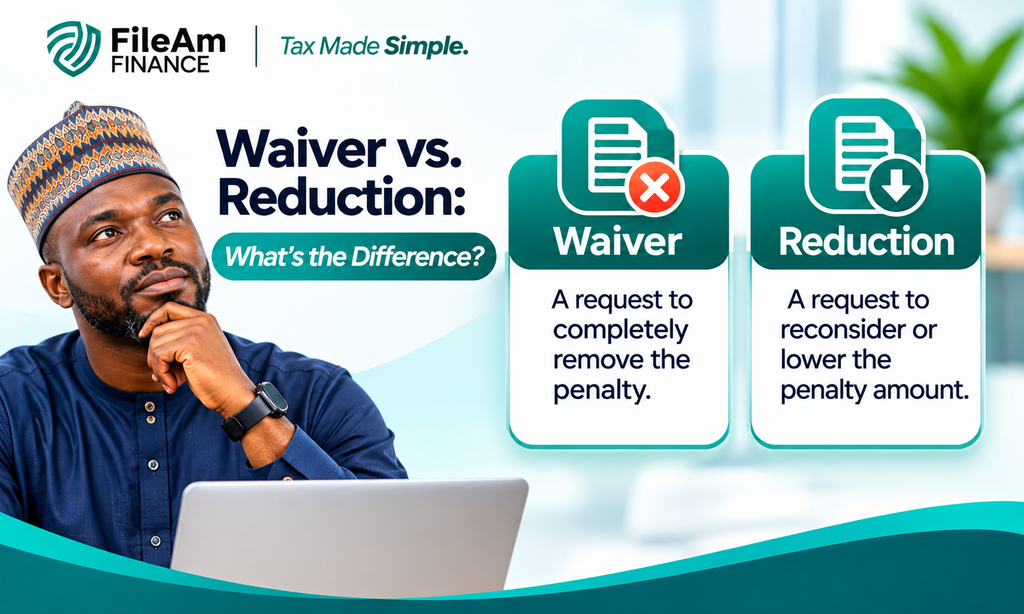
A reduction request is different from a waiver request.
A waiver means:
- The company requests that the penalty be completely removed.
A reduction means:
- The company requests that the penalty amount be reconsidered or lowered.
Businesses may consider requesting a reduction when:
- They acknowledge the late filing issue.
- They have taken steps to correct the problem.
- They can provide reasons explaining the delay.
The strength of a request often depends on how well the company explains its situation and provides supporting evidence.
Factors That May Influence a Penalty Waiver or Reduction Request
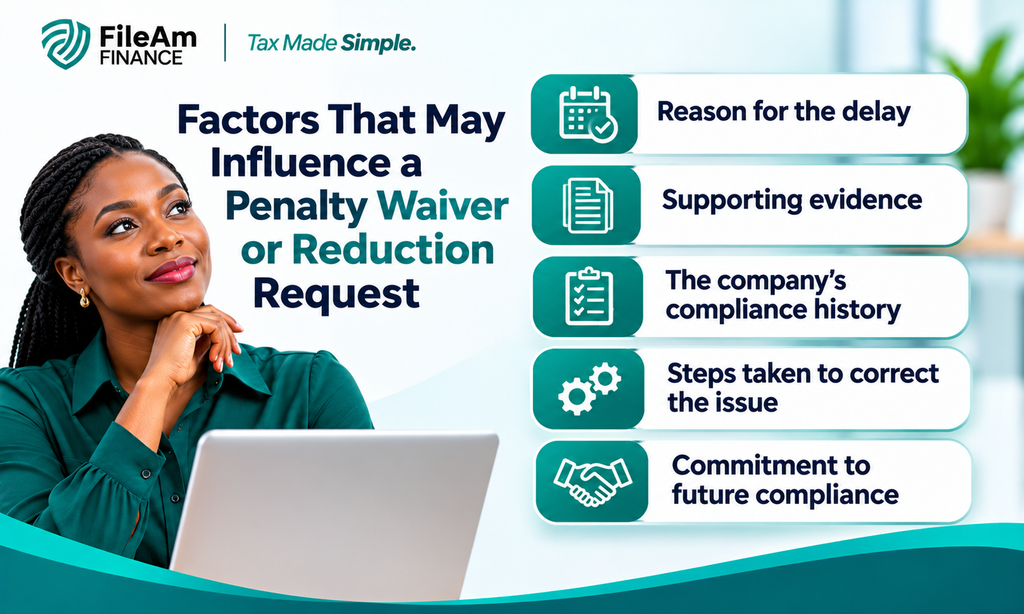
Although there is no guarantee that a penalty will be removed or reduced, certain factors may strengthen a company’s request.
Genuine Business Challenges
A company may have experienced circumstances that affected its ability to complete filing on time.
Examples may include:
- Unexpected disruptions to business operations.
- Internal system failures.
- Delays caused by circumstances beyond the company’s control.
- Challenges accessing necessary financial information.
However, businesses should support these explanations with evidence rather than relying only on verbal claims.
Compliance History
A company’s previous compliance record may be an important consideration.
Businesses that consistently meet their tax obligations may be viewed differently from companies with repeated compliance issues.
A strong compliance history can demonstrate that the late filing was an unusual situation rather than a regular practice.
Prompt Action After Discovering the Penalty
The way a company responds after receiving a penalty can also matter.
Businesses that:
- Review the issue quickly.
- Complete outstanding filing obligations.
- Communicate appropriately.
- Take corrective steps.
show a willingness to resolve the problem.
Ignoring the penalty or delaying action may weaken a company’s position.
Supporting Documentation
Evidence is an important part of any penalty review request.
Supporting documents may include:
- Relevant financial records.
- Internal explanations.
- Business correspondence.
- Evidence of circumstances affecting filing.
A well-supported request is more effective than an unsupported explanation.
How to Request a Review of a Late Filing Penalty
Businesses seeking penalty consideration should approach the process carefully.
Review the Penalty Notice
The first step is understanding the penalty that has been issued.
Companies should confirm:
- The reason for the penalty.
- The affected filing period.
- The amount involved.
- Any instructions provided.
This helps ensure that the business responds appropriately.
Prepare a Formal Explanation
A company requesting consideration should provide a clear explanation of why the filing delay occurred.
The explanation should:
- Be honest.
- Focus on relevant facts.
- Clearly explain the circumstances.
- Avoid unsupported assumptions.
A clear explanation helps reviewers understand the situation.
Provide Supporting Documents
Documents help strengthen the request by showing evidence of the circumstances described.
Depending on the situation, businesses may provide records that support:
- Operational challenges.
- Administrative delays.
- Efforts made to resolve the issue.
Follow Up on the Request
After submitting a request, businesses should maintain proper records of communication.
Companies should keep:
- Copies of submitted requests.
- Supporting documents.
- Responses received.
- Related correspondence.
Proper recordkeeping helps businesses manage future compliance discussions.
Reasons a Penalty Waiver Request May Be Rejected
Not every request for penalty relief will be successful.
A request may face challenges when:
There Is No Supporting Evidence
A simple explanation without documentation may not provide enough basis for consideration.
The Company Has Repeated Compliance Problems
Businesses with a history of frequent late filings may find it more difficult to justify another delay.
The Company Ignores Tax Obligations
A company that continues ignoring outstanding responsibilities may weaken its position.
The Request Is Submitted Without Proper Details
Incomplete requests may delay review or fail to address the important issues.
What Businesses Should Do If the Fine Cannot Be Reduced
If a penalty reduction or waiver request is unsuccessful, businesses should focus on resolving the outstanding obligation and improving future compliance.
The company should:
- Address the outstanding penalty.
- Complete any remaining compliance requirements.
- Review internal tax processes.
- Create better systems for future deadlines.
A rejected request does not mean the business cannot improve its compliance position.
How Businesses Can Avoid Late Filing Penalties in the Future
The most effective way to deal with penalties is to prevent them from happening.
Businesses can reduce their risk by:
- Creating annual tax compliance calendars.
- Preparing financial records throughout the year.
- Setting internal deadlines before official deadlines.
- Maintaining organized documentation.
- Reviewing tax obligations regularly.
- Assigning clear responsibility for tax tasks.
Proper planning gives businesses enough time to identify problems before they become urgent.
How Technology Can Help Businesses Manage Tax Compliance
Many late filing problems happen because businesses lack proper systems for organizing financial information.
Technology can help companies improve compliance by allowing them to:
- Store tax documents securely.
- Track important deadlines.
- Organize financial records.
- Improve collaboration between finance teams.
- Reduce manual administrative work.
Solutions such as FileAm can help businesses simplify tax management by creating a more organized approach to handling compliance activities.
Final Checklist Before Requesting Penalty Relief
Before submitting a request for penalty consideration, businesses should:
- Review the penalty notice carefully.
- Confirm the outstanding filing status.
- Understand the reason for the delay.
- Prepare a clear explanation.
- Gather supporting documents.
- Keep records of all communication.
- Continue improving compliance processes.
A properly prepared request gives businesses a better opportunity to present their situation clearly.
Conclusion
The Fine for late filing of company income tax in Nigeria is not something businesses should ignore, but companies facing genuine challenges may explore available options for requesting consideration.
A waiver or reduction is not automatic and should never be treated as a replacement for proper tax compliance. Businesses must provide valid explanations, support their claims with evidence, and take responsibility for resolving outstanding obligations.
The best strategy remains preventing late filing through proper planning, accurate recordkeeping, and effective compliance management. Companies that build strong tax processes can reduce penalties, avoid unnecessary stress, and maintain better financial credibility.
