Tax Refund Eligibility: How to Qualify, Claim Your Money, and Avoid Costly Mistakes
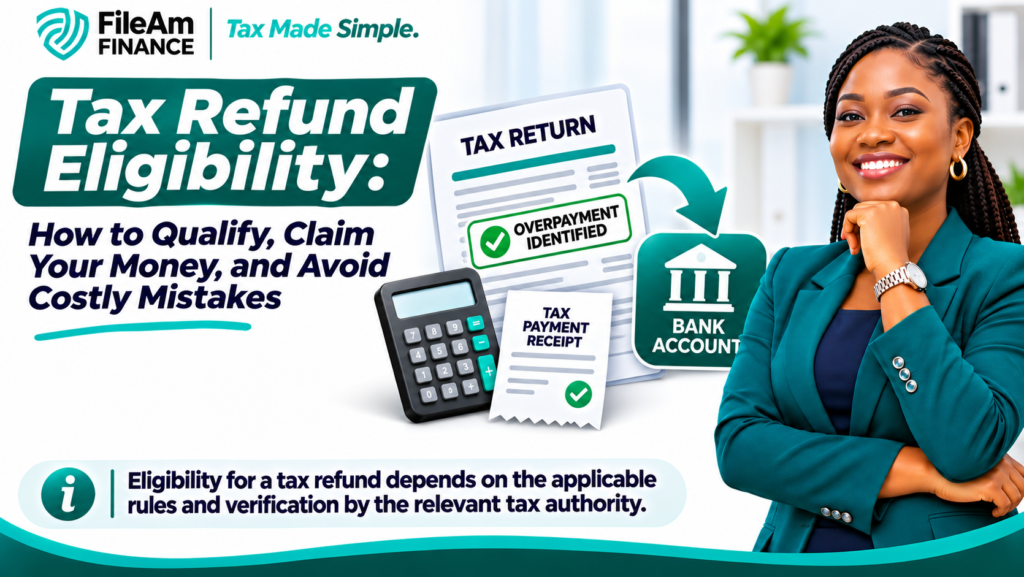
Paying taxes is an important responsibility for individuals and businesses, but paying more tax than necessary can create an unnecessary financial burden. In some circumstances, taxpayers may be entitled to recover excess payments, correct errors in their tax returns, or receive refunds arising from applicable tax reliefs and adjustments. Understanding tax refund eligibility is therefore essential for anyone who wants to manage their tax obligations effectively and recover money they are legally entitled to receive.
Whether you are an employee, a self-employed professional, a business owner, or an organisation managing multiple tax obligations, knowing when you qualify for a tax refund can help you improve cash flow and maintain accurate financial records. However, eligibility requirements vary by country, tax type, and individual circumstances. A refund is not automatically available simply because a taxpayer believes they have paid too much.
In Nigeria, taxpayers should understand the applicable rules administered by the relevant tax authorities, including the Federal Inland Revenue Service (FIRS), which has transitioned to the Nigeria Revenue Service (NRS) under the country’s tax administration reforms, and the relevant state internal revenue services. Businesses must also consider the specific tax rules governing their transactions.
This guide explains how tax refund eligibility works, the circumstances that may qualify you for a refund, the documents you need, and the steps you can take to pursue a legitimate claim.
Definition
Tax refund eligibility refers to the conditions a taxpayer must satisfy before becoming entitled to recover tax already paid or deducted. These conditions are established by the applicable tax legislation and administrative procedures.
A taxpayer may qualify for a refund when the amount paid exceeds the amount legally due, a payment was made in error, or an adjustment creates an overpayment that the tax authority recognises as refundable.
For example, a company may discover that it paid more tax than required after reconciling its accounts and filing the appropriate returns. Similarly, an individual may identify an excessive deduction or an incorrect tax assessment that resulted in an overpayment.
However, not every tax credit or excess payment automatically results in cash being returned. Depending on the applicable law, the amount may need to be verified, applied against outstanding liabilities, carried forward to a future tax period, or processed through a formal refund procedure.
Understanding the distinction between an overpayment, a tax credit, and an approved refund is an important first step towards making a successful claim.
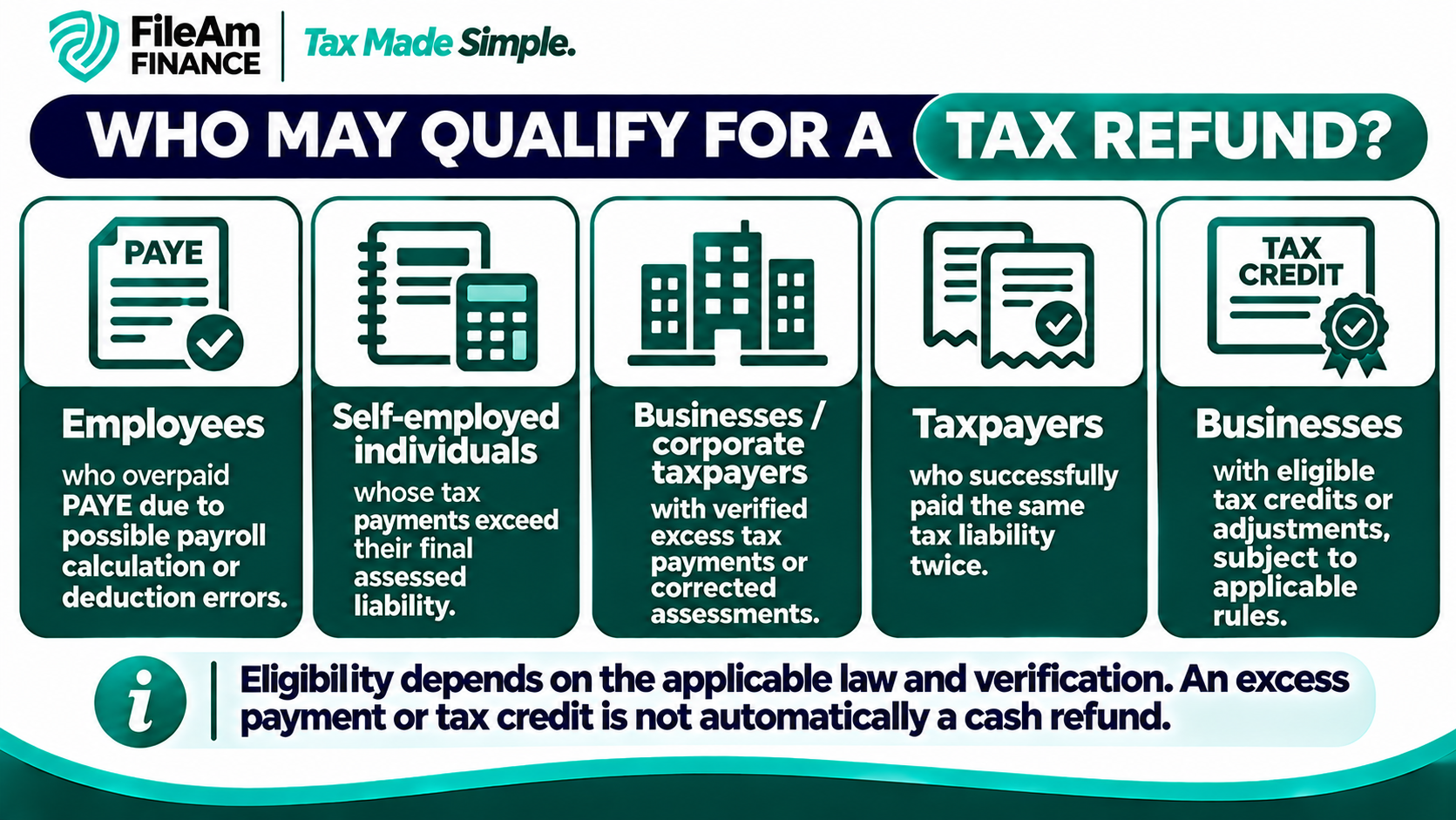
Who May Qualify for a Tax Refund?
Tax refund eligibility depends on the taxpayer’s circumstances and the rules governing the relevant tax. The following categories may have grounds to request a refund where the applicable legal requirements are satisfied.
1. Employees Who Have Overpaid Tax
Employees may be eligible for refunds when their tax deductions exceed their actual tax liability. This can occur because of incorrect payroll calculations, duplicate deductions, inaccurate income information, or errors in the treatment of allowable reliefs.
In Nigeria, Pay As You Earn (PAYE) tax is generally deducted from employees’ salaries and remitted through the applicable state tax administration system. Where an employee believes too much tax has been deducted, the first step is to review their payslips, annual income information, and relevant tax records.
An employee should then establish whether the deductions were genuinely excessive under the applicable rules. A payroll error does not automatically establish a right to a refund without verification.
2. Self-Employed Individuals
Self-employed professionals, consultants, contractors, and sole traders may qualify for a refund when their tax payments exceed their final assessed liability.
This can happen when provisional payments are higher than the amount ultimately due or when an assessment is corrected following the submission of accurate financial information.
To support a claim, self-employed taxpayers should maintain reliable records of income, business expenses, tax payments, assessments, and any applicable deductions or reliefs. These records help establish the correct tax position and provide evidence for the relevant authority to review.
3. Businesses and Corporate Taxpayers
Businesses may have grounds to claim refunds where they have made excess tax payments, paid an incorrect assessment, or established an overpayment after a lawful adjustment.
For example, a company may discover during its annual tax reconciliation that its payments exceed the corporation tax liability established under the applicable rules. A business may also identify an error in a previous return that requires correction.
Companies should not assume that every excess payment will be returned in cash. The relevant authority may first verify the claim, determine whether the amount is legally refundable, and consider any outstanding tax obligations.
Professional tax advice can be particularly valuable where the claim involves multiple accounting periods, amended returns, significant amounts, or disputed assessments.
4. Taxpayers Who Have Paid the Same Tax Twice
Duplicate payments are another possible basis for a refund request. A taxpayer may accidentally pay the same liability twice because of a banking error, duplicate payment instructions, or a misunderstanding of an existing assessment.
In such circumstances, payment receipts, bank statements, tax identification details, and the relevant assessment records can help demonstrate the duplication.
The taxpayer should confirm that both payments were actually received and credited by the relevant authority. A duplicated instruction that was never completed is different from two successful payments.
5. Businesses Seeking Eligible Tax Credits or Adjustments
Depending on the applicable tax regime, businesses may accumulate credits or overpayments arising from withholding tax, indirect taxes, or other recognised tax adjustments.
For instance, a business may have withholding tax deducted by a customer and receive the relevant credit documentation. Whether that credit can be refunded, offset against another liability, or used to reduce a future payment depends on the governing legislation and the taxpayer’s specific circumstances.
Businesses should distinguish between a credit that reduces their tax liability and an amount that qualifies for a cash refund. This distinction prevents inaccurate expectations and improves financial planning.
Key Factors That Determine Tax Refund Eligibility
Before submitting a claim, taxpayers should examine the factors that may determine whether their application will be accepted.
Evidence of Excess Payment
The taxpayer must be able to demonstrate that an amount was paid or deducted and explain why it exceeds the amount legally due. Payment receipts, bank statements, tax assessments, payroll records, and filed returns may provide supporting evidence.
Accuracy of Tax Returns
Incorrect or incomplete returns can complicate refund claims. Taxpayers should reconcile their records and correct relevant errors using the procedures permitted by the applicable tax authority.
Compliance With Filing Requirements
Outstanding returns, missing documents, or unresolved assessments may delay the processing of a claim. Depending on the applicable law, particular compliance failures may also affect the taxpayer’s entitlement.
Applicable Refund Deadlines
Tax refund claims may be subject to statutory limitation periods or administrative deadlines. Waiting too long can make recovery more difficult or prevent a claim from being considered.
Taxpayers should confirm the applicable deadline before preparing an application, particularly when the overpayment relates to an earlier tax year.
Outstanding Tax Liabilities
An excess payment does not necessarily mean the taxpayer will receive the full amount in cash. Where the law permits, the tax authority may apply a verified credit against outstanding liabilities before determining whether a balance remains refundable.
These factors demonstrate why checking eligibility before filing is more effective than submitting an unsupported claim and hoping for approval.
Documents Required to Support a Tax Refund Claim
Preparing the right documents can reduce avoidable delays and make it easier for the tax authority to verify the claim.
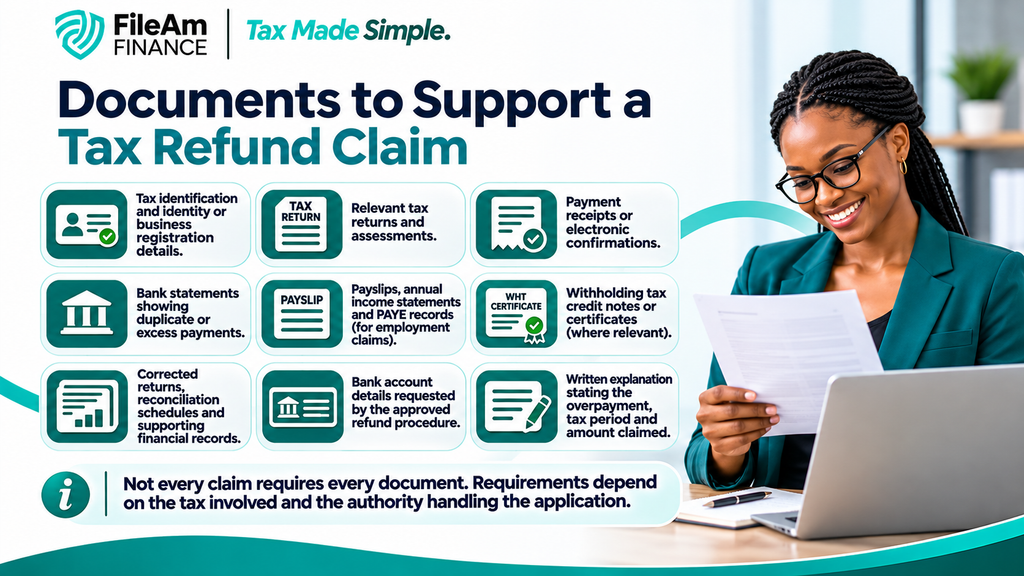
Commonly relevant documents include:
- Tax identification details and evidence of the taxpayer’s identity or business registration, where applicable.
- Copies of the relevant tax returns and assessments.
- Receipts or electronic confirmations showing that the tax was paid.
- Bank statements or other evidence of duplicate or excess payments.
- Payslips, annual income statements, and PAYE records for employment-related claims.
- Withholding tax credit notes or certificates, where relevant.
- Corrected returns, reconciliation schedules, and supporting financial records.
- Bank account details requested through the authority’s approved refund procedure.
- A written explanation identifying the overpayment, the period concerned, and the amount being claimed.
Not every claim requires every document on this list. The exact requirements depend on the tax involved and the authority handling the application.
Taxpayers should ensure that the figures in their application agree with the underlying records. Inconsistencies between payment receipts, tax returns, and assessment notices may result in additional enquiries.
Tax refund eligibility refers to the conditions a taxpayer must satisfy before becoming entitled to recover tax already paid or deducted. These conditions are established by the applicable tax legislation and administrative procedures.
A taxpayer may qualify for a refund when the amount paid exceeds the amount legally due, a payment was made in error, or an adjustment creates an overpayment that the tax authority recognises as refundable.
For example, a company may discover that it paid more tax than required after reconciling its accounts and filing the appropriate returns. Similarly, an individual may identify an excessive deduction or an incorrect tax assessment that resulted in an overpayment.
However, not every tax credit or excess payment automatically results in cash being returned. Depending on the applicable law, the amount may need to be verified, applied against outstanding liabilities, carried forward to a future tax period, or processed through a formal refund procedure.
Understanding the distinction between an overpayment, a tax credit, and an approved refund is an important first step towards making a successful claim.
Who May Qualify for a Tax Refund?
Tax refund eligibility depends on the taxpayer’s circumstances and the rules governing the relevant tax. The following categories may have grounds to request a refund where the applicable legal requirements are satisfied.
1. Employees Who Have Overpaid Tax
Employees may be eligible for refunds when their tax deductions exceed their actual tax liability. This can occur because of incorrect payroll calculations, duplicate deductions, inaccurate income information, or errors in the treatment of allowable reliefs.
In Nigeria, Pay As You Earn (PAYE) tax is generally deducted from employees’ salaries and remitted through the applicable state tax administration system. Where an employee believes too much tax has been deducted, the first step is to review their payslips, annual income information, and relevant tax records.
An employee should then establish whether the deductions were genuinely excessive under the applicable rules. A payroll error does not automatically establish a right to a refund without verification.
2. Self-Employed Individuals
Self-employed professionals, consultants, contractors, and sole traders may qualify for a refund when their tax payments exceed their final assessed liability.
This can happen when provisional payments are higher than the amount ultimately due or when an assessment is corrected following the submission of accurate financial information.
To support a claim, self-employed taxpayers should maintain reliable records of income, business expenses, tax payments, assessments, and any applicable deductions or reliefs. These records help establish the correct tax position and provide evidence for the relevant authority to review.
3. Businesses and Corporate Taxpayers
Businesses may have grounds to claim refunds where they have made excess tax payments, paid an incorrect assessment, or established an overpayment after a lawful adjustment.
For example, a company may discover during its annual tax reconciliation that its payments exceed the corporation tax liability established under the applicable rules. A business may also identify an error in a previous return that requires correction.
Companies should not assume that every excess payment will be returned in cash. The relevant authority may first verify the claim, determine whether the amount is legally refundable, and consider any outstanding tax obligations.
Professional tax advice can be particularly valuable where the claim involves multiple accounting periods, amended returns, significant amounts, or disputed assessments.
4. Taxpayers Who Have Paid the Same Tax Twice
Duplicate payments are another possible basis for a refund request. A taxpayer may accidentally pay the same liability twice because of a banking error, duplicate payment instructions, or a misunderstanding of an existing assessment.
In such circumstances, payment receipts, bank statements, tax identification details, and the relevant assessment records can help demonstrate the duplication.
The taxpayer should confirm that both payments were actually received and credited by the relevant authority. A duplicated instruction that was never completed is different from two successful payments.
5. Businesses Seeking Eligible Tax Credits or Adjustments
Depending on the applicable tax regime, businesses may accumulate credits or overpayments arising from withholding tax, indirect taxes, or other recognised tax adjustments.
For instance, a business may have withholding tax deducted by a customer and receive the relevant credit documentation. Whether that credit can be refunded, offset against another liability, or used to reduce a future payment depends on the governing legislation and the taxpayer’s specific circumstances.
Businesses should distinguish between a credit that reduces their tax liability and an amount that qualifies for a cash refund. This distinction prevents inaccurate expectations and improves financial planning.
Key Factors That Determine Tax Refund Eligibility
Before submitting a claim, taxpayers should examine the factors that may determine whether their application will be accepted.
Evidence of Excess Payment
The taxpayer must be able to demonstrate that an amount was paid or deducted and explain why it exceeds the amount legally due. Payment receipts, bank statements, tax assessments, payroll records, and filed returns may provide supporting evidence.
Accuracy of Tax Returns
Incorrect or incomplete returns can complicate refund claims. Taxpayers should reconcile their records and correct relevant errors using the procedures permitted by the applicable tax authority.
Compliance With Filing Requirements
Outstanding returns, missing documents, or unresolved assessments may delay the processing of a claim. Depending on the applicable law, particular compliance failures may also affect the taxpayer’s entitlement.
Applicable Refund Deadlines
Tax refund claims may be subject to statutory limitation periods or administrative deadlines. Waiting too long can make recovery more difficult or prevent a claim from being considered.
Taxpayers should confirm the applicable deadline before preparing an application, particularly when the overpayment relates to an earlier tax year.
Outstanding Tax Liabilities
An excess payment does not necessarily mean the taxpayer will receive the full amount in cash. Where the law permits, the tax authority may apply a verified credit against outstanding liabilities before determining whether a balance remains refundable.
These factors demonstrate why checking eligibility before filing is more effective than submitting an unsupported claim and hoping for approval.
Tax Refund Eligibility in Nigeria: Important Rules to Understand
Nigeria’s tax framework changed significantly from 1 January 2026, with the Nigeria Tax Act 2025 and Nigeria Tax Administration Act 2025 introducing the current framework for relevant tax obligations. Taxpayers should therefore confirm which rules apply to the particular assessment period involved.
Under Section 55 of the Nigeria Tax Administration Act 2025, eligible overpayments and excess taxes are refundable following an audit by the relevant tax authority. The section also provides for refunds within 90 days of the relevant authority’s decision, with the option of setting the amount off against an outstanding tax liability. Written claims are subject to a six-year period measured from the end of the relevant year of assessment.
Value-added tax (VAT) refunds are governed by additional provisions. Section 56 of the Nigeria Tax Administration Act establishes a requirement to submit a VAT refund request in the prescribed form within 12 months of the transaction giving rise to the claim. For a valid request, the Act provides for a refund or eligibility for a tax-liability set-off within 30 days of receipt. Section 155 of the Nigeria Tax Act 2025 also addresses excess input VAT that remains unused as a credit and may qualify for a refund upon request and provision of the required information or documents.
These provisions should not be interpreted as guaranteeing payment to every applicant within the stated period. The taxpayer must satisfy the relevant eligibility conditions, provide the required information, and follow the applicable procedures.
For federal tax matters, taxpayers can consult the Nigeria Revenue Service (NRS). Personal income tax matters should be directed to the appropriate state internal revenue service or other relevant authority, depending on the taxpayer and the nature of the liability.
The NRS provides an official Taxpayer Self-Service Portal through which taxpayers can manage relevant tax affairs and track refund requests.
Common Mistakes That Can Delay a Tax Refund
Even when a taxpayer has a legitimate claim, avoidable mistakes can complicate the process.
Submitting incomplete documentation: Missing payment receipts, inconsistent tax records, or absent supporting certificates can make verification more difficult.
Claiming an amount without reconciling the figures: The amount requested should be supported by a clear calculation showing the tax paid, the liability due, and the resulting excess.
Using the wrong tax authority: A claim submitted to an authority that did not receive or administer the relevant payment may require redirection or additional clarification.
Ignoring statutory deadlines: Different refund categories may have different time limits. The general six-year period for written claims under Section 55 should not be confused with the specific 12-month deadline for VAT refund requests under Section 56.
Confusing a tax credit with a cash refund: An available credit may reduce future tax payments without creating an immediate entitlement to cash.
Failing to respond to verification requests: Tax authorities may require additional records or clarification before reaching a decision. Delayed responses can prolong the process.
Avoiding these mistakes can help taxpayers submit better-supported claims and manage their expectations regarding the outcome.
How Professional Tax Support Can Improve Your Refund Claim
Tax refund applications can become complicated when they involve multiple assessments, different tax periods, withholding tax credits, VAT adjustments, or disputed calculations. Professional tax support can help identify the relevant rules, reconcile financial records, assess the strength of a claim, and prepare the necessary documentation.
For businesses, a structured review may also reveal recurring overpayments or weaknesses in tax administration. Correcting these issues can improve compliance and reduce the likelihood of similar errors in future accounting periods.
Before engaging a tax consultant, confirm their experience with the relevant tax category, understand the scope of their services, and request a clear explanation of the proposed fees. No consultant can legitimately guarantee approval of a refund that has not been established under the applicable law.
Frequently Asked Questions About Tax Refund Eligibility
Can I claim a tax refund if I paid too much tax?
Potentially, yes. You must establish that the payment exceeded your legal tax liability or otherwise qualifies for a refund under the applicable legislation. Supporting documents and verification by the relevant authority may be required.
How long does a tax refund take in Nigeria?
The applicable period depends on the type of claim and the governing provisions. Section 55 of the Nigeria Tax Administration Act 2025 provides for eligible general tax refunds within 90 days of the relevant authority’s decision. Section 56 provides a separate 30-day period for a valid VAT refund request. These periods are subject to the relevant statutory conditions and should not be treated as guarantees that every application will be approved or paid within that time.
Can a business claim a refund for duplicate tax payments?
A business may qualify where it can demonstrate that the same liability was paid more than once and the excess is refundable under the applicable rules. Payment receipts, bank statements, and assessment records can help substantiate the claim.
Is a tax refund the same as a tax credit?
No. A refund involves recovering an eligible amount, while a tax credit generally reduces a tax liability or may be carried forward or set off where permitted. Whether a credit can be converted into a cash refund depends on the applicable legislation.
Where can I check my tax refund status in Nigeria?
For relevant federal tax claims, you can visit the NRS Taxpayer Self-Service Portal and use its available refund services. For state-administered personal income tax matters, contact the appropriate state revenue authority.
Conclusion: Confirm Your Tax Refund Eligibility Today
Understanding tax refund eligibility is an important part of responsible financial management. Whether you are an employee who has experienced excessive tax deductions, a self-employed professional reconciling payments, or a business reviewing its tax accounts, identifying an eligible overpayment can help you recover funds that should not remain unnecessarily tied up.
The most effective approach is to confirm the correct tax liability, gather reliable evidence, review the applicable statutory deadlines, and submit a properly documented claim to the relevant authority. In Nigeria, taxpayers should pay particular attention to the distinction between general tax refunds and VAT refund procedures under the 2025 tax legislation.
Do not leave a potential tax refund unchecked. Review your tax payments, reconcile your records, and seek qualified tax assistance where necessary. A professional assessment can help you determine whether you qualify, identify the appropriate application procedure, and prepare a claim supported by the relevant documentation.
Take the next step today: consult a qualified tax professional or contact the relevant tax authority to assess your circumstances and establish whether you have a legitimate refund claim. The earlier you identify an overpayment, the better positioned you will be to act within the applicable deadlines and protect your financial interests.