Smart Tax Debt Payment Solutions to Restore Your Financial Freedom
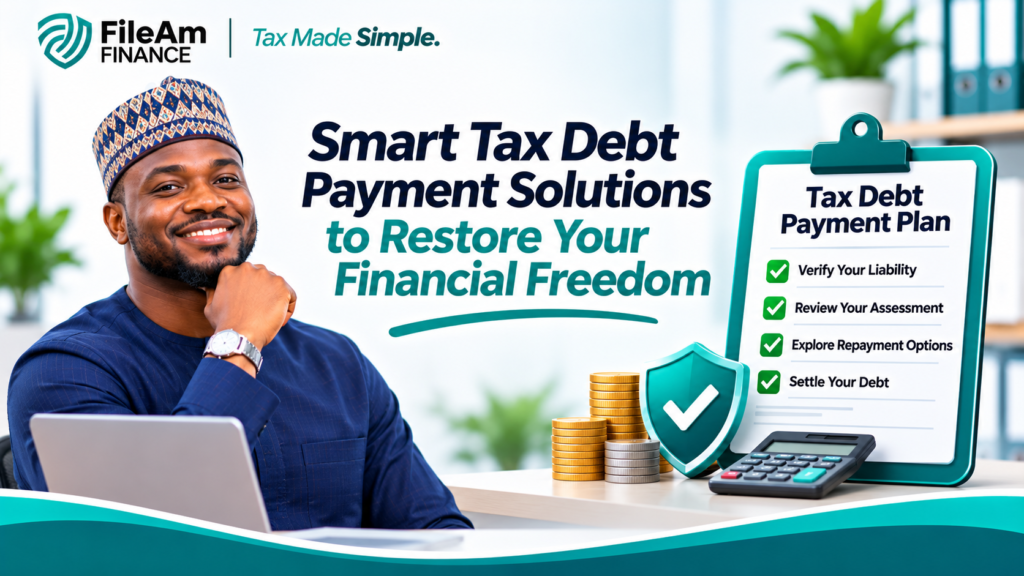
Unpaid taxes can become a significant financial burden for individuals, self-employed professionals, and businesses in Nigeria. No one finds dealing with tax debt payments palatable, whether the debt results from unpaid personal income tax, outstanding company tax, an incorrect assessment, or temporary cash flow difficulties, unresolved tax obligations can create financial pressure and uncertainty.
For many taxpayers, the challenge is not simply understanding how much they owe but finding a practical way to settle the liability without disrupting their household finances or business operations. Fortunately, there are steps you can take to address outstanding taxes, review your assessment, and explore suitable repayment options.
A well-planned tax debt payment strategy can help you manage your obligations, reduce the risk of further penalties where permitted, and regain control of your finances. Rather than ignoring tax notices or waiting for the problem to escalate, taking action early can put you in a better position to resolve the debt.
This blogpost explores practical tax debt payment solutions for Nigerian taxpayers, including how to verify outstanding liabilities, approach the relevant tax authority, explore payment arrangements, challenge incorrect assessments, and prevent future tax problems.
If you currently have outstanding tax liabilities, start by reviewing your tax records and contacting the appropriate tax authority to establish the amount due and the options available to you.
Understanding Tax Debt in Nigeria
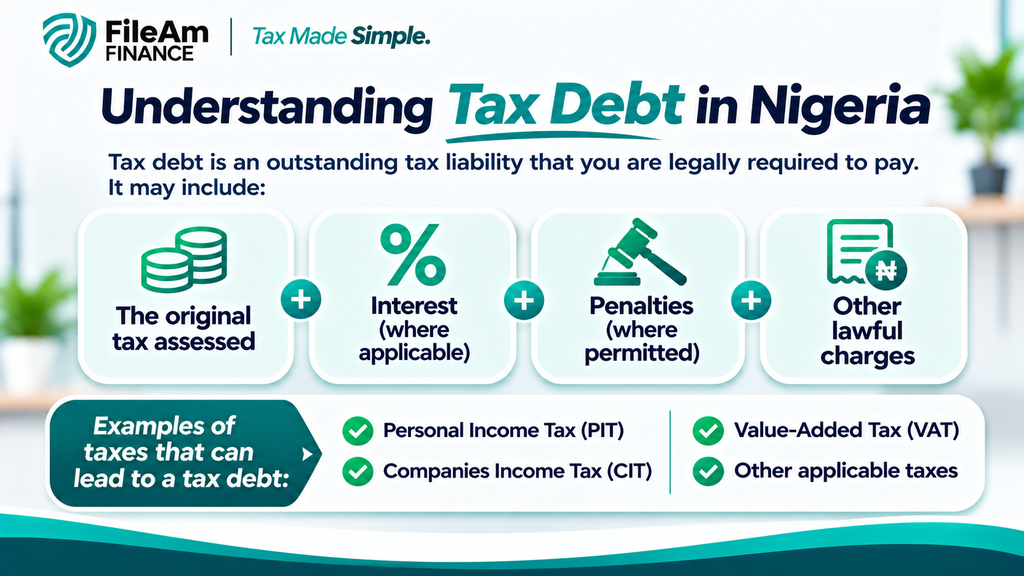
Tax debt refers to an outstanding tax liability that an individual or business is legally required to pay. Depending on the circumstances and applicable legislation, the amount may include the original tax assessed, interest, penalties, and other lawful charges.
In Nigeria, tax obligations vary according to the taxpayer’s circumstances and the nature of the income or transaction involved. For example, an employee may have outstanding personal income tax, while a business may owe company income tax, value-added tax (VAT), or other applicable taxes.
A self-employed professional, consultant, trader, or freelancer may also face an unexpected liability after reviewing income records or receiving a tax assessment.
Tax debt can arise from missed payment deadlines, inaccurate tax returns, inadequate recordkeeping, cash flow problems, or misunderstandings about tax obligations. Sometimes, taxpayers discover that payments have not been correctly credited or that an assessment contains errors.
It is important to identify the source of the debt before deciding how to resolve it. A valid tax liability that cannot immediately be paid requires a different approach from an assessment that is legally or factually incorrect.
Why You Should Address Tax Debt Payment Promptly
Ignoring outstanding tax obligations can make an already difficult situation more complicated. Depending on the applicable law, unpaid taxes may attract interest or penalties, while prolonged non-compliance may lead to recovery or enforcement proceedings.
For business owners, unresolved tax liabilities can also interfere with financial planning, business expansion, and the preparation of reliable financial statements. Individuals may experience difficulty managing household expenses when unexpected tax demands arise.
Taking early action allows you to establish the amount owed, identify any errors, and ask the relevant authority about available procedures. Where permitted, you may also be able to explore an instalment arrangement or apply for an eligible form of relief.
Acting promptly does not necessarily mean paying the entire debt immediately. It means understanding your obligations and taking appropriate steps to resolve them before the situation becomes more difficult.
How to Confirm Your Outstanding Tax Liability
Before making a tax debt payment, establish exactly how much you owe and which tax authority is responsible for collecting it.
Begin by reviewing your assessment notices, tax returns, payment receipts, bank statements, and previous correspondence. Compare the amount assessed with payments already made and identify any discrepancies.
Request an updated statement of account from the relevant authority if necessary. Confirm whether the balance represents the original tax liability alone or includes additional interest, penalties, or charges.
If you believe the assessment is incorrect, gather supporting documents before making assumptions about the amount payable. Depending on the circumstances, you may need to request a reconciliation, correct a filing error, or submit a formal objection within the applicable deadline.
Nigeria’s tax framework changed on 1 January 2026, when key provisions of the 2025 tax legislation took effect. The Federal Government’s transition guidance explains that liabilities and proceedings relating to earlier periods may continue to be governed by the previous tax laws, while the applicable rules for later periods follow the new framework. Confirm which rules apply to your particular assessment before proceeding. Federal Ministry of Finance guidance.
Practical Tax Debt Payment Solutions
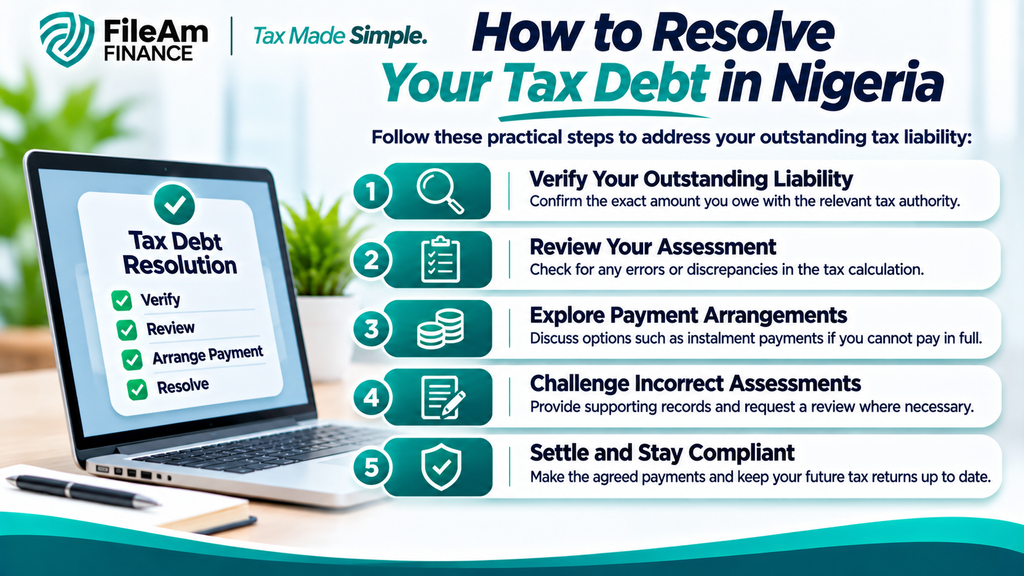
1. Settle the Debt in Full
If you have sufficient funds, paying the outstanding balance in full may be the most straightforward option. Once the payment is processed and properly credited, the liability covered by that payment can be settled.
Before paying, verify the balance and obtain the correct payment instructions from the responsible tax authority. Use an authorised channel, provide the appropriate taxpayer identification details, and retain your receipt.
However, consider your overall financial position before using your savings to settle the debt. You should account for essential household expenses, business operating costs, and other unavoidable commitments.
2. Ask About Instalment Payments
If you cannot afford to pay the entire amount at once, contact the relevant tax authority to ask whether an instalment arrangement is available.
For example, a small business in Lagos that owes outstanding taxes but is experiencing temporary cash flow difficulties could request information about an approved repayment arrangement. The business should present its financial position, explain its ability to pay, and propose a realistic schedule.
Any arrangement depends on the applicable rules and the authority’s approval. Confirm the required documentation, payment dates, interest treatment, and consequences of missing an instalment. Do not assume that submitting a request automatically suspends collection action.
3. Explore Eligible Penalty Relief
In some circumstances, tax laws provide mechanisms for the remission of penalties or other forms of relief. Eligibility depends on the applicable legislation, the circumstances of the taxpayer, and the requirements of the responsible authority.
If you believe you qualify, ask about the formal application procedure and supporting documents required. Explain your circumstances honestly and keep copies of all submissions.
Do not assume that financial hardship automatically cancels a tax liability or that every taxpayer qualifies for a waiver. The availability and scope of relief must be verified under the rules applicable to the debt.
4. Challenge an Incorrect Assessment
Sometimes, the best solution is to determine whether the tax assessment is correct.
A taxpayer may discover that a payment was not credited, income was incorrectly recorded, or the amount assessed does not reflect the relevant tax records. In such cases, review the assessment and gather supporting evidence.
You may need to request an administrative review or submit a formal objection or appeal, depending on the applicable procedure. Pay close attention to statutory deadlines and obtain professional advice if the dispute involves a substantial amount.
Remember that disputing an assessment does not necessarily suspend every payment or compliance obligation. Confirm the effect of your objection with the relevant authority.
Which Nigerian Tax Authority Should You Contact?
Choosing the correct authority is an essential part of resolving tax debt.
Under Nigeria’s tax administration framework, the Nigeria Revenue Service (NRS) administers relevant federal taxes, including company income tax and VAT. State Internal Revenue Services administer relevant state tax obligations, including personal income tax, subject to the applicable laws and jurisdictional rules.
The authority responsible for your liability depends on the type of tax, the taxpayer involved, and the relevant legal provisions. You should therefore check the assessment notice and confirm the issuing authority before making payment.
For example, an individual with an outstanding personal income tax assessment in Lagos should contact the Lagos State Internal Revenue Service (LIRS) through its official channels. A company with an outstanding federal company income tax liability should verify the appropriate process with the NRS.
Official resources include the Nigeria Revenue Service and the Lagos State Internal Revenue Service. Use the relevant authority’s current instructions to verify your assessment and payment procedure.
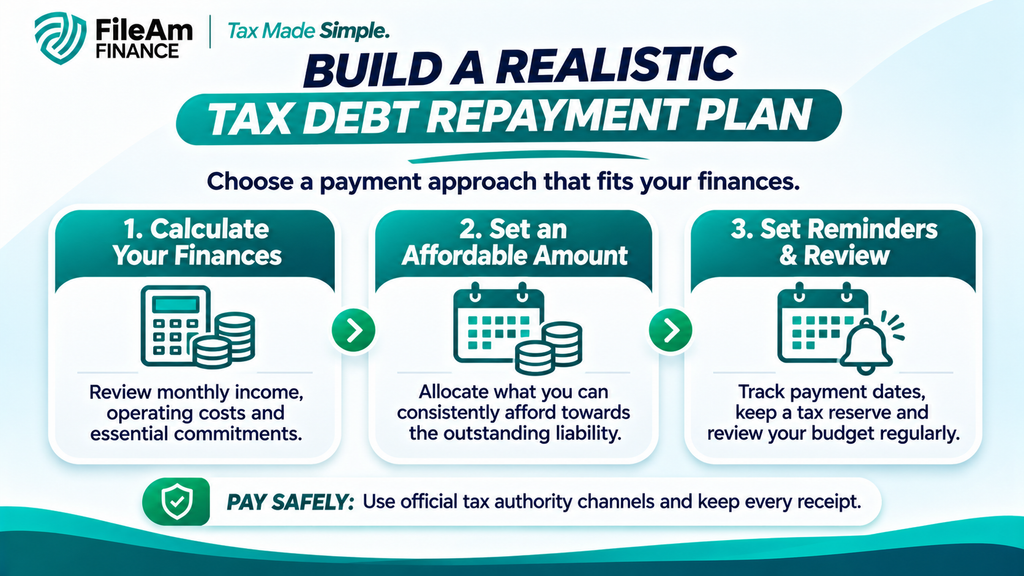
How to Create a Realistic Repayment Plan
A repayment plan should reflect what you can reasonably afford, rather than what you hope to afford in an ideal month.
- Calculate Monthly expenses
Start by calculating your monthly income and essential expenses. For a business, review sales revenue, operating costs, staff salaries, supplier payments, and other financial commitments.
- Determine outstanding allocation
determine how much money can consistently be allocated towards the outstanding tax liability. If full payment is not realistic, ask the authority whether an approved instalment arrangement is available.
- Set reminders
Set reminders for payment dates and maintain a separate reserve for future tax obligations. Review your budget regularly and communicate promptly with the authority if your circumstances change.
A practical repayment plan can help you address existing liabilities without creating unnecessary pressure on your other financial responsibilities.
How to Make Tax Debt Payments Safely
Always verify the payment instructions through the official tax authority or its authorised payment platform.
Avoid transferring money to a personal bank account because an individual claims to be a tax officer or intermediary. Confirm the correct payment reference, taxpayer identification details, and official channel before proceeding.
After payment, retain the receipt and transaction confirmation. Check your tax account to ensure the payment has been credited to the correct liability. If it does not appear, contact the authority and provide evidence of the transaction.
For businesses, maintain organised records of assessments, correspondence, payment confirmations, and reconciliations. These documents can help resolve future discrepancies and demonstrate compliance.
Preventing Future Tax Debt
Once you have addressed your outstanding liability, take steps to prevent the same problem from recurring.
Maintain accurate financial records, track filing and payment deadlines, and review your tax obligations regularly. If you operate a business, include tax liabilities in your cash flow forecasts instead of waiting until payment deadlines approach.
Individuals and self-employed professionals should also set aside funds for applicable taxes when income is received, where appropriate. If your tax affairs are complex, consult a qualified Nigerian tax professional who understands the relevant legislation.
Regular reviews can help you identify errors early, prepare for upcoming payments, and avoid unnecessary financial surprises.
Take Action Today to Resolve Your Tax Debt
Tax debt does not have to remain a long-term financial burden. With accurate information, a realistic repayment strategy, and the right guidance, you can take meaningful steps towards resolving your outstanding obligations.
Whether you need to settle a balance in full, explore instalment payments, investigate eligible penalty relief, or challenge an incorrect assessment, the first step is to establish the facts and understand your available options.
Ready to take control of your tax debt? Gather your tax assessment notices, payment receipts, and relevant financial records today. Contact the appropriate Nigerian tax authority to confirm your outstanding balance and ask about the lawful payment or dispute procedures available to you.
If your liability is substantial or your circumstances are complicated, seek advice from a qualified tax professional before committing to a repayment arrangement.
Do not wait until an unresolved tax problem disrupts your finances further.