Tax Compliance Reporting: How to Simplify Compliance and Reduce Transactional Errors
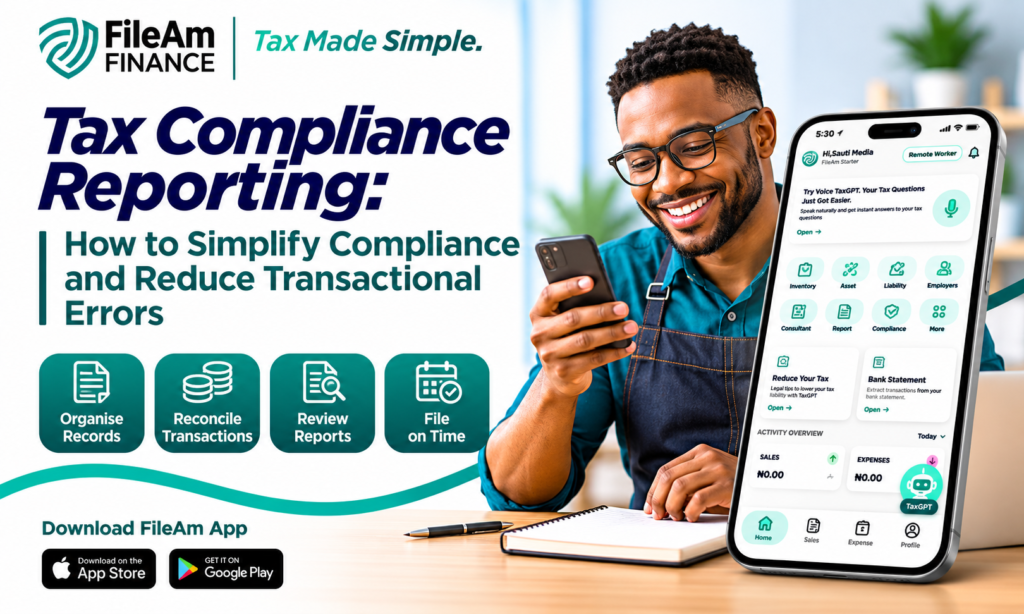
Tax compliance is an important part of running a business, but keeping up with reporting requirements can be challenging. From collecting financial records and calculating tax liabilities to preparing returns and meeting filing deadlines, businesses must manage several tasks to remain compliant. When these activities are handled manually or across disconnected systems, mistakes can happen, deadlines can be missed and valuable time can be lost correcting errors.
For businesses in Nigeria, these challenges can become more complicated as operations expand, transaction volumes increase and tax obligations become more demanding. Finance teams must ensure that the information they report is accurate, supporting documents are available and payments are properly recorded.
This is where tax compliance reporting becomes essential. With the right processes and digital tools, businesses can organise tax information, prepare accurate reports, monitor deadlines and reduce the risk of avoidable mistakes.
Simplifying tax compliance does not necessarily mean making every process more complicated with new technology. It means creating a reliable system that helps employees work efficiently, identify discrepancies early and maintain accurate records.
In this post, we explore what tax compliance reporting involves, why businesses struggle with it, how to reduce reporting errors and how automation can make tax management more efficient.
Tax Compliance Reporting
Tax compliance reporting is the process of collecting, reviewing and submitting the financial information required to meet applicable tax obligations. It may involve preparing tax returns, documenting tax calculations, reporting relevant transactions and maintaining records that support the amounts declared to tax authorities.
The exact reporting requirements depend on the type of taxpayer, the nature of the business, the tax involved and the applicable law.
For example, a business may need to prepare company income tax returns, manage withholding tax records, account for applicable indirect taxes and meet employment-related tax obligations. An employer may also need to maintain accurate payroll information for relevant tax reporting purposes.
Tax compliance reporting goes beyond submitting forms. It includes the activities that make accurate reporting possible, such as maintaining reliable financial records, reconciling transactions, checking calculations and retaining supporting documentation.
When these activities are properly organised, businesses can prepare reports with greater confidence and respond more effectively to questions from tax authorities, auditors or internal management.
Why Is Tax Compliance Reporting Important?
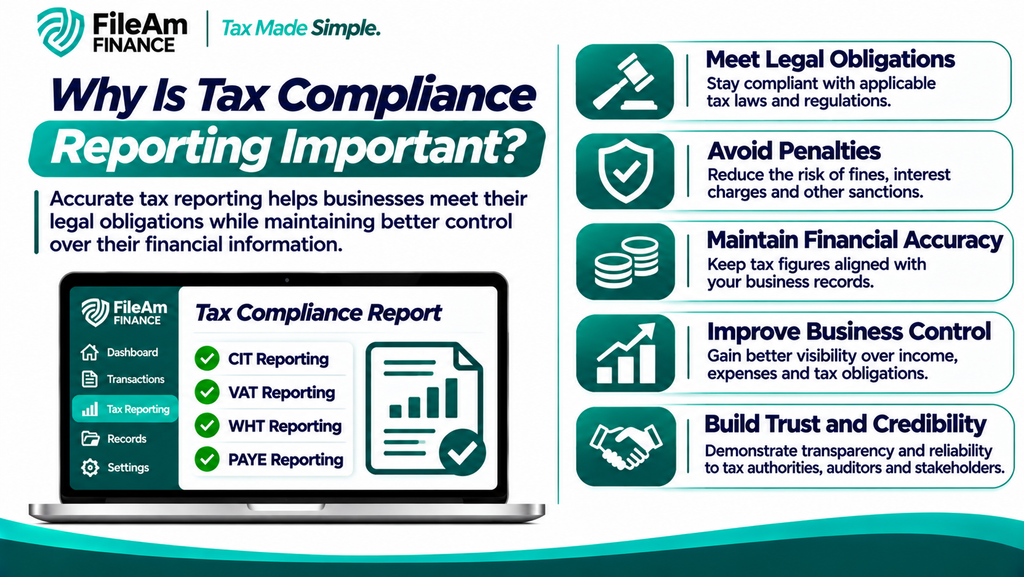
Accurate tax reporting helps businesses meet their legal obligations while maintaining better control over their financial information.
Several benefits make it an important part of business operations.
1. Reduces the Risk of Errors
Incorrect figures, duplicate entries and missing transactions can affect tax calculations and returns. A structured reporting process helps identify these issues before information is submitted.
2. Helps Businesses Meet Deadlines
Tax reporting often involves several deadlines throughout the year. Keeping a clear calendar of filing dates, payment dates and internal review deadlines helps employees plan their work and avoid last-minute pressure.
3. Improves Financial Visibility
Tax reports provide information about tax liabilities, payments and outstanding obligations. When records are accurate, management can make better decisions about cash flow and financial planning.
4. Supports Recordkeeping and Audits
Businesses may need to explain how reported figures were calculated or provide evidence for particular transactions. Well-organised records make it easier to retrieve supporting documents and respond to queries.
5. Helps Prevent Avoidable Compliance Costs
Errors and late submissions can lead to additional administrative work and, where applicable, penalties or interest. Effective reporting processes help businesses reduce preventable mistakes and manage their obligations more consistently.
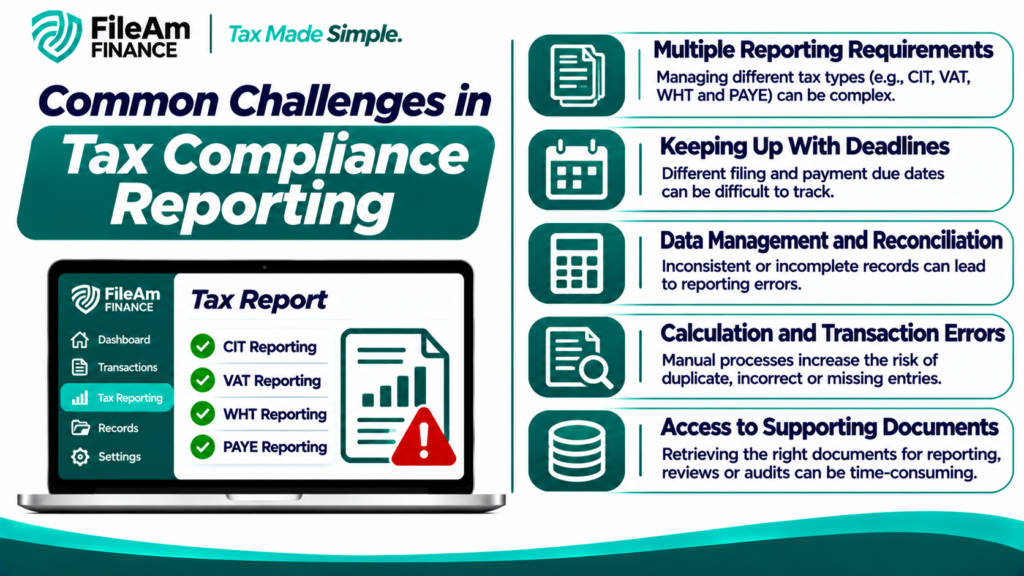
Common Challenges Businesses Face With Tax Compliance Reporting
Even businesses with experienced finance teams can struggle to maintain accurate tax records. Many of these challenges arise because the reporting process depends on information collected from different departments, systems and individuals.
Manual Data Entry
Entering financial information manually into spreadsheets, accounting systems and tax forms increases the risk of typing errors, duplicate records and incorrect calculations.
When the same figures are copied between multiple documents, a mistake in one place can affect several reports.
Disorganised Financial Records
Tax information may be scattered across invoices, bank statements, payroll records, emails and shared folders. If documents are incomplete or difficult to locate, preparing a return becomes more time-consuming.
Missing records can also make it harder to explain reported figures or verify whether a transaction has been treated correctly.
Frequent Regulatory Changes
Tax laws, administrative procedures and reporting requirements can change. Businesses that rely on outdated templates or old assumptions may continue using processes that no longer reflect current requirements.
Finance teams therefore need a reliable way to monitor relevant changes and confirm how they affect their reporting obligations.
Missed Deadlines
When deadlines are tracked through personal calendars or informal reminders, an important filing may be overlooked, particularly when the employee responsible is absent or dealing with other priorities.
Businesses managing several tax types may find it especially difficult to coordinate all their reporting obligations without a central system.
Poor Communication Between Departments
Tax reporting often depends on information from accounting, payroll, procurement, sales and other teams. If these departments submit incomplete or delayed information, the finance team may struggle to prepare accurate reports on time.
Addressing these challenges requires a combination of clear processes, good recordkeeping and appropriate technology.
7 Practical Ways to Simplify Tax Compliance Reporting and Reduce Errors
Businesses do not need to overhaul their entire financial system to improve tax reporting. Small, consistent improvements can make a significant difference when they are applied across the reporting process.
1. Keep Financial Records Organised
Accurate reporting begins with reliable financial information. Businesses should maintain organised records of income, expenses, invoices, payroll transactions, tax deductions and previous payments.
Instead of storing documents in multiple locations without a clear structure, create a central filing system with consistent naming conventions and access permissions.
For example, a business could organise tax documents by financial year, tax category and reporting period. This makes it easier for employees to locate supporting records when preparing returns.
2. Reconcile Financial Data Regularly
Reconciliation involves comparing records from different sources to identify discrepancies.
Finance teams should regularly compare accounting records with bank statements, payroll information, tax calculations and payment confirmations. This helps identify missing transactions, duplicate entries and differences between recorded liabilities and actual payments.
Finding these problems before preparing a return is generally easier than correcting them after submission.
3. Establish a Tax Compliance Calendar
A central compliance calendar helps businesses track filing dates, payment deadlines, internal review dates and document submission requirements.
Assigning each task to a responsible employee makes accountability clearer. It is also helpful to schedule internal deadlines before official deadlines, allowing enough time to review calculations and resolve missing information.
Businesses with several reporting obligations can use software reminders to notify the relevant team members when action is required.
4. Introduce a Review and Approval Process
Tax reports should be checked before they are submitted. Depending on the size of the business, this may involve a finance officer preparing the report and a tax manager or authorised reviewer checking the figures.
The review should confirm that calculations are reasonable, required information is complete and supporting documents are available.
For more complex businesses, documented approval workflows can help ensure that no important step is skipped.
5. Use Tax Compliance Reporting Software
Digital tools can reduce the amount of manual work involved in preparing and monitoring tax reports.
Depending on the platform, software may help businesses organise documents, automate supported calculations, generate reports, monitor deadlines and maintain payment records.
For Nigerian taxpayers, the Nigeria Revenue Service Taxpayer Self-Service Portal provides official digital services that include self-tax filing, payments, assessments and access to tax balances.
Businesses should assess whether they also need separate tax operations software to coordinate internal processes across accounting, payroll and finance teams.
6. Keep Up With Relevant Tax Changes
Tax reporting procedures should be reviewed whenever relevant legislation or administrative guidance changes.
Nigeria’s tax framework changed significantly from 1 January 2026, and the government has issued transition guidance addressing the treatment of existing liabilities, assessments and returns across the old and new tax regimes. Businesses should therefore confirm which rules apply to each reporting period rather than assuming every historical and current obligation follows the same requirements.
A qualified tax professional or reliable official source can help the business understand how changes affect its reporting processes.
7. Train Employees Responsible for Tax Reporting
Even with good software, employees need to understand how to use the system and follow established procedures.
Provide training on recordkeeping, data entry, document handling, reporting deadlines and internal approvals. Employees should also know how to flag discrepancies instead of making unsupported adjustments to tax figures.
Regular training helps maintain consistency as staff responsibilities change or new employees join the business.
How Automation Improves Tax Compliance Reporting
Automation can help businesses move away from repetitive administrative tasks and toward a more structured reporting process.
For example, imagine a business that previously collected invoices from several departments, manually entered figures into spreadsheets and calculated tax liabilities before each reporting deadline.
With suitable software, some of these tasks could be streamlined. Information may be imported from connected accounting systems, missing records flagged for review, deadlines monitored automatically and reports generated
This can reduce duplicated work and give the finance team more time to check the accuracy of the information.
However, automation is only as reliable as the data and rules behind it. Incorrect source data, outdated tax settings or poorly configured workflows can still produce errors. Businesses should therefore combine automation with regular reviews and human oversight.
When evaluating a software solution, check its reporting capabilities, integrations, security controls, support arrangements and ability to accommodate relevant tax requirements.
Measuring the Success of Your Tax Reporting Process
Once a business has improved its reporting process, it should assess whether the changes are producing meaningful results.
Useful measures include:
- Error rates: How often does the team need to correct tax reports?
- Reporting time: How long does it take to gather information and prepare a return?
- Deadline performance: Are filing and payment obligations completed on time?
- Record retrieval: How quickly can employees locate supporting documents?
- Reconciliation issues: How many discrepancies remain unresolved at the end of each reporting period?
- Manual workload: How much time is spent on repetitive data entry and follow-ups?
Tracking these measures over time helps management identify which processes need further improvement. It also makes it easier to assess whether investment in tax compliance software is delivering practical value.
Conclusion
Effective tax compliance reporting is about more than submitting returns before a deadline. It involves maintaining accurate records, verifying calculations, coordinating responsibilities and ensuring that every reported figure can be supported by reliable documentation.
Businesses can simplify this process by organising financial records, reconciling accounts regularly, establishing clear reporting calendars and introducing appropriate review procedures. Tax compliance software can provide additional support by reducing repetitive work, monitoring deadlines and improving visibility into outstanding tasks.
For Nigerian businesses, it is equally important to keep up with applicable tax requirements and verify that reporting processes reflect the rules relevant to each tax period.
The goal is not simply to complete tax reporting faster. It is to build a dependable process that reduces avoidable errors, improves accountability and helps the business manage its obligations with greater confidence